Biography
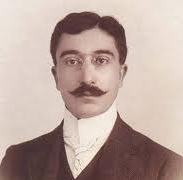
William Henry Davies (1871–1940) was a Welsh poet and writer, widely known as the "tramp poet." His life was unusual and marked by striking contrasts. From years of poverty and wandering across North America to recognition within British literary circles, his personal experiences shaped a direct, accessible, and deeply humane poetic voice. His work frequently explored nature, everyday life, loneliness, the hardships of the poor, and the importance of noticing beauty in ordinary moments.
He was born on 3 July 1871 in Pillgwenlly, an area of Newport in south-east Wales. His father, Francis Boase Davies, was an iron-moulder, and his mother was Mary Ann Evans. His father died when William was three years old. Following his mother's remarriage, William and his siblings were brought up by their grandparents. He attended schools in Newport, where he developed an early interest in reading and poetry. After leaving school, he was apprenticed to a picture-frame maker.
At the age of twenty-two, Davies left Wales for the United States, arriving in New York in 1893 with very little money. For several years he travelled throughout the United States and Canada, often riding freight trains illegally, seeking casual employment and sometimes surviving by begging. He worked at agricultural jobs and made occasional journeys to Britain as a worker on cattle-ships. These experiences of adventure, danger, poverty, and social insecurity later became the subject of his best-known autobiographical work, The Autobiography of a Super-Tramp (1908).
In March 1899, while attempting to board a moving train at Renfrew, Ontario, Canada, he fell beneath the wheels and lost his right foot. His right leg was subsequently amputated below the knee. After recovering, he returned to Britain and settled in London. He lived in inexpensive common lodging houses, sold small goods in the streets, and relied partly on a modest weekly allowance from his family inheritance. Despite these hardships, he remained determined to establish himself as a writer.
In 1905, he managed to publish his first collection of poetry, The Soul's Destroyer and Other Poems, using his own savings to print an initial edition of only two hundred copies. His friendship with the poet Edward Thomas proved important, as Thomas recognized his literary talent and helped him connect with the literary world of the time. In 1908, Davies published The Autobiography of a Super-Tramp. Further collections followed, including Nature Poems and Others (1908), Songs of Joy and Others (1911), Foliage (1913), and The Bird of Paradise and Other Poems (1914).
By 1911, Davies had established himself as a poet and was granted a Civil List pension. In 1929, the University of Wales awarded him an honorary Doctor of Letters degree in recognition of his contribution to literature. On 5 February 1923, he married Helen Payne, whom he had met at a bus stop in London. They had no children and lived in several towns and rural communities in England, away from the pressures of the capital.
Davies lived through a period of profound social and cultural transformation, from Victorian Britain, with its industrial expansion and deep social inequalities, to the First World War and the interwar years. Although he was not a political poet in the narrow sense, his work retained a strong social awareness. He gave literary attention to people living on the margins of society and emphasized the dignity of ordinary life. His best-known poem, Leisure (1911), expresses sadness at the modern condition of being so occupied with daily worries that people no longer find time to observe and enjoy the beauty of the world around them.
He died on 26 September 1940 in Nailsworth, Gloucestershire, at the age of sixty-nine. He left behind a substantial body of poetry and prose in which personal hardship was transformed into a sensitive reflection on human existence.