Biography
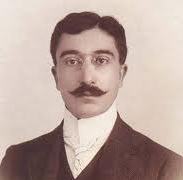
Antonio Machado was a Spanish poet, born in Seville on 26 July 1875. He spent his youth in Madrid, where he studied and began publishing satirical writings in newspapers and literary magazines.
In 1899 and 1902, he lived in Paris, where he came into contact with the leading literary and artistic movements of the time. In 1903, he published his first poetry collection, *Soledades* (*Solitudes*). Later, he became a French teacher at the Institute of Soria.
In 1912, Machado published his second poetry collection, *Fields of Castile* (*Campos de Castilla*), widely regarded as his masterpiece. The same year, tragedy struck when his young wife, Leonor Izquierdo, whom he had married in 1909, died of tuberculosis. Devastated by her death, Machado expressed his profound grief in a series of poems later incorporated into *Fields of Castile*. Unable to bear the memories associated with Soria, he resigned from the institute and moved to Baeza, in Andalusia.
From 1924 onward, Machado devoted less attention to poetry and increasingly turned to philosophical writing, creating a series of fictional dialogues between imaginary thinkers. During this period, he also wrote several plays in collaboration with his brother, Manuel Machado.
The outbreak of the Spanish Civil War found Machado in Madrid. He openly supported the Republican government, writing speeches and articles condemning fascism. In contrast, his brother Manuel aligned himself with Franco's Nationalist forces and wrote in support of the dictatorship. The division between the Machado brothers reflected the deep political and ideological divisions that tore Spain apart during the Civil War.
As Franco's armies advanced, Machado fled Madrid for Valencia and later followed the Republican government to Barcelona. When Catalonia collapsed in early 1939, and only three days before Franco's troops entered Barcelona, Machado fled the city with his elderly and frail mother.
At the French border, chaos reigned as thousands of refugees struggled to escape. Forced to abandon most of their belongings, they continued the journey on foot. According to accounts, Machado helped his exhausted mother through the difficult crossing until they finally reached Collioure, in southern France.
They found shelter in a modest hotel crowded with fellow refugees. Exhausted by the journey and suffering from pneumonia, Machado received little medical care. He died on 22 February 1939, at the age of sixty-three. His mother, Ana Ruiz, who had remained at his bedside, died just three days later, on 25 February 1939.
Antonio Machado is remembered as one of Spain's greatest poets. His work, marked by lyrical simplicity, philosophical depth, and profound compassion, remains a timeless testimony to the beauty of the Spanish landscape, the tragedy of civil conflict, and the enduring dignity of the human spirit.