Historical Context
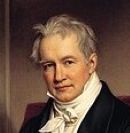
Political, social and cultural background during the life of Humboldt Alexander.
Alexander, born in 1769, grew up in the intellectual climate of the Enlightenment, when reason, observation and scientific inquiry were challenging older systems of authority and traditional explanations of the natural world. During his youth, European thinkers increasingly sought to classify nature, understand its laws and apply knowledge to society.
The French Revolution of 1789 radically changed the political landscape of Europe. Its consequences, followed by the rise of Napoleon and the Napoleonic Wars, affected Humboldt’s own plans for scientific travel and created decades of political instability across the continent. Prussia itself suffered military defeat and later underwent major administrative, educational and social reforms.
At the same time, European colonial empires still controlled vast territories overseas. Humboldt’s journey through Spanish America between 1799 and 1804 brought him directly into contact with colonial societies, Indigenous peoples, plantation economies and slavery. His observations led him to criticize slavery, colonial exploitation and the destruction of Indigenous cultures. He travelled just before the great wars of independence that transformed Spanish America during the early nineteenth century.
Humboldt also lived through the early Industrial Revolution, a period in which science, technology, mining, transport and industry were rapidly changing European societies. Scientific disciplines were becoming increasingly specialized, yet Humboldt resisted the fragmentation of knowledge. He believed that geology, climate, biology, geography and human activity should be studied as parts of a connected whole.
By the time of the European revolutions of 1848, Humboldt was already an internationally celebrated scientist. His life thus stretched from the Enlightenment and the age of exploration to the emergence of modern industrial society and professional science. This historical transition shaped his central idea: that both nature and human civilization can only be understood through the relationships that connect them.
The French Revolution of 1789 radically changed the political landscape of Europe. Its consequences, followed by the rise of Napoleon and the Napoleonic Wars, affected Humboldt’s own plans for scientific travel and created decades of political instability across the continent. Prussia itself suffered military defeat and later underwent major administrative, educational and social reforms.
At the same time, European colonial empires still controlled vast territories overseas. Humboldt’s journey through Spanish America between 1799 and 1804 brought him directly into contact with colonial societies, Indigenous peoples, plantation economies and slavery. His observations led him to criticize slavery, colonial exploitation and the destruction of Indigenous cultures. He travelled just before the great wars of independence that transformed Spanish America during the early nineteenth century.
Humboldt also lived through the early Industrial Revolution, a period in which science, technology, mining, transport and industry were rapidly changing European societies. Scientific disciplines were becoming increasingly specialized, yet Humboldt resisted the fragmentation of knowledge. He believed that geology, climate, biology, geography and human activity should be studied as parts of a connected whole.
By the time of the European revolutions of 1848, Humboldt was already an internationally celebrated scientist. His life thus stretched from the Enlightenment and the age of exploration to the emergence of modern industrial society and professional science. This historical transition shaped his central idea: that both nature and human civilization can only be understood through the relationships that connect them.
Born
1769
Category
Science
Country
GERMANY