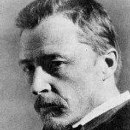
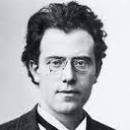
Anton Bruckner (1824–1896) was an Austrian composer and organist whose monumental symphonies transformed the possibilities of nineteenth-century orchestral music. Deeply rooted in the traditions of church music, yet boldly innovative in his treatment of harmony, orchestral sound, and musical form, he became one of the most distinctive and influential symphonists of the late Romantic era.
Bruckner was born on September 4, 1824, in Ansfelden, Upper Austria, the eldest of eleven children. His father was a village schoolteacher and church musician, and from an early age Bruckner was introduced to music, particularly to the organ and sacred music. He learned to play the piano, violin, and organ, and by the age of ten was already serving as a substitute organist.
After the death of his father in 1837, Bruckner was sent to St. Florian Abbey, where he became a choirboy and received further musical training. The monastery would remain one of the most important places in his life. Its magnificent organ, sacred musical tradition, and spiritual atmosphere left a profound impression on him and remained closely connected with his musical identity.
Bruckner initially followed the profession of a teacher while continuing to develop as a musician. He worked as a schoolteacher and organist in several towns in Upper Austria, studying music theory and composition with remarkable determination. His musical education was unusually long and demanding; even after he had established himself professionally, he continued to study harmony, counterpoint, and orchestration.
In 1855, at the age of thirty-one, Bruckner became cathedral organist in Linz. He soon gained a reputation as a brilliant organist and, above all, as an extraordinary improviser. His performances attracted attention well beyond his native region. Yet the organ was not ultimately to be his greatest legacy. His deepest ambition was to become a symphonic composer.
During the 1860s, Bruckner's musical language underwent a decisive transformation. He encountered the music of Richard Wagner, whose influence can be heard particularly in his harmonic language and orchestral conception. At the same time, Bruckner developed a highly personal style characterized by massive orchestral structures, powerful brass writing, dramatic climaxes, long musical spans, and sudden contrasts between monumental sound and profound stillness.
His Symphony No. 1 was premiered in Linz in 1868. That same year, Bruckner moved to Vienna, where he became a teacher of music theory and organ and began the most important and difficult chapter of his career.
Vienna, however, did not immediately welcome him. Bruckner was a modest, deeply religious man from rural Upper Austria, very different from the sophisticated cultural circles of the imperial capital. His symphonies were long, structurally complex, and unlike much of the music preferred by the Viennese establishment. The influential critic Eduard Hanslick was particularly hostile toward Bruckner's music, contributing to the composer's long struggle for recognition.
Bruckner nevertheless continued to compose with extraordinary persistence. Among his greatest achievements are the Symphonies Nos. 4, 5, 7, 8, and 9, as well as his Te Deum, Masses, and other sacred works. His Seventh Symphony, premiered in Leipzig in 1884, finally brought him widespread recognition and marked a decisive turning point in his career.
Bruckner's music occupies a unique position between the symphonic traditions of Beethoven and Schubert and the expansive musical world of the late nineteenth century. He combined the architectural discipline of classical forms with an immense Romantic conception of time and sound. His symphonies can move from the quietest passages to overwhelming orchestral climaxes, often creating a sense of vastness and spiritual transcendence.
Although he achieved fame only relatively late in life, Bruckner eventually received important honours. Emperor Franz Joseph I became one of his supporters and helped secure the publication of some of his works.
In his final years, Bruckner devoted himself increasingly to his Ninth Symphony in D minor, which he hoped would become the culmination of his symphonic achievement. He was unable to complete the final movement.
Anton Bruckner died in Vienna on October 11, 1896, at the age of seventy-two. According to his wishes, he was buried beneath the organ at St. Florian Abbey, the place that had shaped his early musical and spiritual life.
Today, Bruckner is regarded as one of the great symphonists of the nineteenth century. His music, at once monumental and deeply spiritual, expanded the scale, expressive power, and orchestral possibilities of the symphony. What was once regarded as excessive or difficult became, in the twentieth and twenty-first centuries, one of the defining achievements of the late Romantic symphonic tradition.