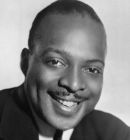
Basie Count

Basie Count

1904 - 1984 (80)
Play like you play. Play like you think, and then you got it, if you're going to get it. And whatever you get, that's you, so that's your story.

Biography

Count Basie, born William James Basie, was an American pianist, organist, composer, and bandleader and one of the most important figures in the history of jazz. He was born on August 21, 1904, in Red Bank, New Jersey, and showed remarkable musical ability from an early age, receiving his first piano lessons from his mother.
During the 1920s, Basie moved to New York and later found his way to Kansas City, where he encountered some of the most important musicians of the era. He worked with Walter Page and Bennie Moten, and after Moten's death in 1935, he formed his own band. A live radio broadcast from the Reno Club in Kansas City helped bring him to wider attention, and a radio announcer gave him the nickname "Count." In 1937, his orchestra moved to New York and developed into the celebrated Count Basie Orchestra. Through his sparse and highly rhythmic piano style, his emphasis on the rhythm section, and his ability to give soloists room to shine, Basie played a decisive role in shaping the sound of swing and big-band jazz. His orchestra featured outstanding musicians such as Lester Young, while Basie collaborated throughout his career with artists including Ella Fitzgerald and Frank Sinatra. His legacy includes classic recordings such as One O'Clock Jump, April in Paris, and Everyday I Have the Blues. Basie received nine Grammy Awards and, in 1958, became the first African-American male to receive a Grammy. He was also named an NEA Jazz Master in 1983. He died on April 26, 1984, in Hollywood, Florida, leaving behind one of the most important musical legacies in the history of jazz.