HUACA DEL SOL (TEMPLE OF THE SUN), MOCHICA CULTURAL CAPITAL
4 KM SOUTH OF THE MODERN CITY OF TRUJILLO

Moches had created a huge network of aqueducts and irrigation projects to develop agricultural crops with products such as beans, potatoes, pumpkins, peppers, sweet potatoes, fruits (guava, avocado, papaya, pineapples) and corn as the main product. Apart from eating corn in various ways, they also made a kind of beer with his juice. Moche were also famous fishermen, had many kinds of fish and shellfish in their diet while barely any meat. They have been pioneers in metal processing, having developed cutting-edge techniques such as gilding and soldering, enabling them to create highly elaborate jewelry and handicrafts.
4 KM SOUTH OF THE MODERN CITY OF TRUJILLO
INSIDE TEMPLE OF THE SUN
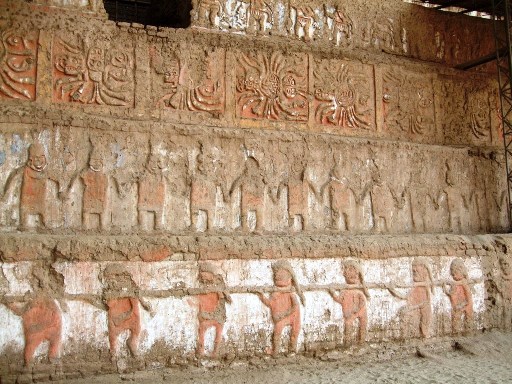
Moche were warriors, they used to capture prisoners from neighboring areas and sacrificing them in a barbarous way, often after public torture. Their main deity was Ai Apaec who is often depicted by holding on one hand some kind of ritual knife and a cut head on the other.
AI APAEC

The culture of Moche did not develop scripture and therefore there are no historical texts, what we know is from frescoes, ceramics and analyzes of archaeological finds. Moche’s monuments and tombs decorated with frescoes depicting rituals and human sacrifices, , have been discovered as well with many ceramics pots depicting deities or scenes of sexual encounter
CERAMIC POT FOR THE TRANSPORTATION OF LIQUIDS

Much of these finds were discovered in the Sun's temple, a massive construction of solid brickwork, at a height of forty meters; the rest were buried in tombs all over the northern coast of Peru. Until today more than 100,000 vases have been found and exhibited in museums and private collections around the world.
Back to the Story of Humankind