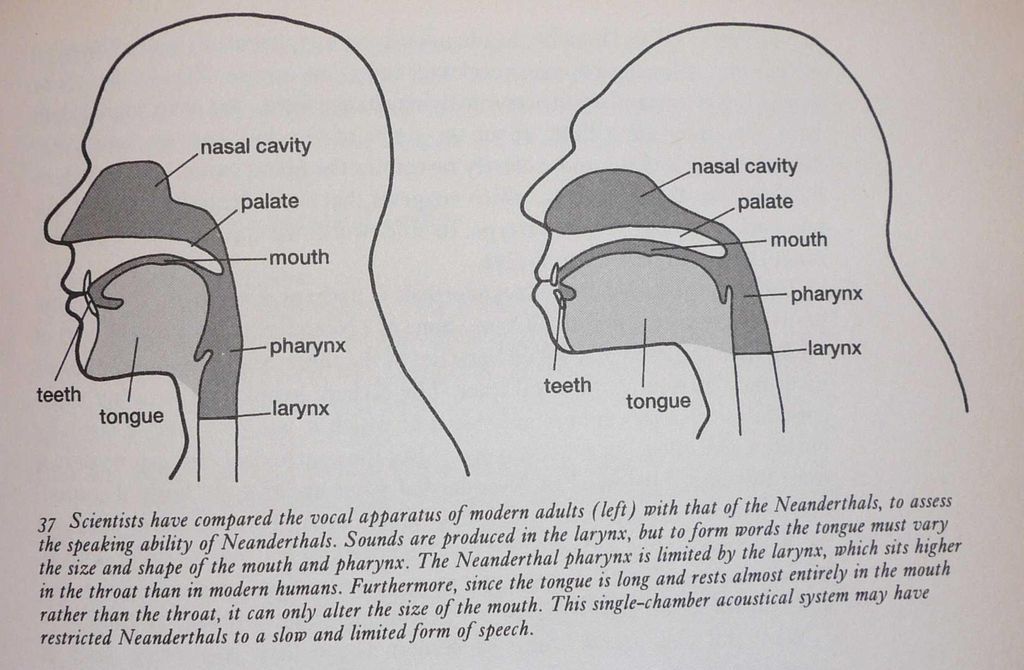
For thousands of years people have been making sounds, roar and groaning, talking with nods and gestures, gradually, and as long as they stood up, the larynx went down into the pharynx, producing more and more complex sounds.
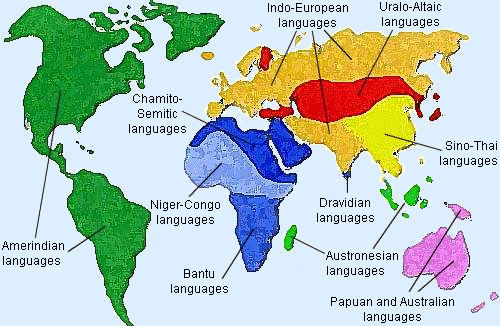
Up to 10,000 years ago there were many thousands of languages and idioms, since then thousands have disappeared, even today, dozens of languages die every year. Many were only spoken, others assimilated to larger ones, some were lost from the face of the land without leaving any footprints.
The speech contributed the most in the creation of man and his culture. It is the connecting link between generations. Animals during their lives see and learn and understand many things, but without speaking, when they die, all their experiences are dying with them. New generations begin almost from the beginning -excluding genetic heritage-, the little animal must discover the world from scratch. On the other hand, little humans can be taught by the older ones and as they grow they develop the knowledge to deliver it enriched. For the sake of speech - and later of writing - man can rest on the backs of his ancestors to ascend higher and higher. Back to the Story of Humankind