About 2.5 million years ago, the first representatives of the genus Homo appeared in Africa. Biologists classify organisms using a two-part Latin name: first the genus, and then the species. Organisms belonging to the same genus share common ancestors and important similarities, while members of the same species can usually reproduce with one another and produce fertile offspring. For example, the domestic cat belongs to the genus Felis and the species catus. The same genus also includes related species such as the wildcat (Felis silvestris) and the jungle cat (Felis chaus).
Humans belong to the genus Homo and the species sapiens (“wise”). Their full biological classification is as follows: Kingdom: Animals (Animalia)
Subphylum: Vertebrates (Vertebrata)
Class: Mammals (Mammalia)
Order: Primates (Primates)
Family: Hominids (Hominidae)
Genus: Homo
Species: Homo sapiens
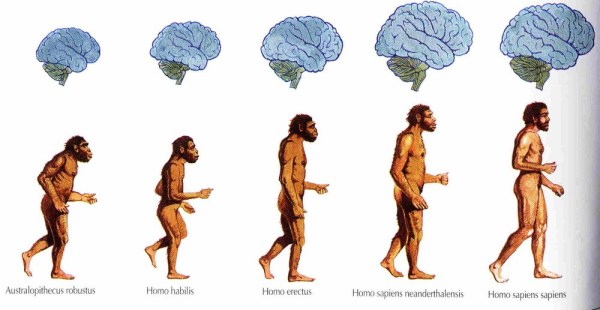 One of the earliest known species of the genus Homo was Homo habilis, which lived about 2.4 million years ago and likely evolved from australopithecine ancestors. Homo habilis possessed a larger brain and more advanced tool-using abilities than its predecessors.
As early humans spread from Africa into Europe and Asia, they encountered different climates, environments, and challenges. Through this long evolutionary journey, many different human species emerged, including Homo erectus, Homo neanderthalensis, and Homo floresiensis.
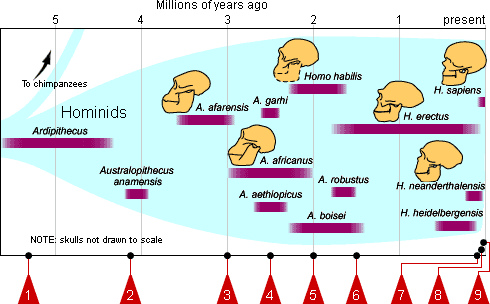
Human evolution did not follow a simple straight line. There was no single species that directly “gave birth” to the next in a continuous chain. For long periods of time, different human species coexisted, and around 100,000 years ago several distinct human species were living simultaneously in different parts of the world.
Some species disappeared because of climate changes, competition for resources, or small population sizes, while others left descendants that continued the evolutionary process. In the end, only Homo sapiens survived to the present day. Back to the Story of Humankind