 Homo habilis — The Handy Human
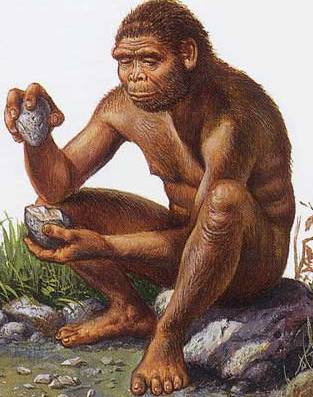
About 2.4 million years ago, early human ancestors appeared that differed significantly from the australopithecines. Because of their larger brains — which had increased from about 450 to nearly 700 cubic centimeters — along with changes in their teeth, anatomy, and behavior, scientists classified them in the genus Homo habilis. The name means “handy human” in Latin, reflecting their growing skill in the use of tools.
Homo habilis — The Handy Human
About 2.4 million years ago, early human ancestors appeared that differed significantly from the australopithecines. Because of their larger brains — which had increased from about 450 to nearly 700 cubic centimeters — along with changes in their teeth, anatomy, and behavior, scientists classified them in the genus Homo habilis. The name means “handy human” in Latin, reflecting their growing skill in the use of tools.
Homo habilis weighed more than 50 kilograms, stood about 1.5 meters tall, and had relatively long arms compared with modern humans. Compared to australopithecines, they possessed a higher cranial vault, a broader forehead region, and larger parietal bones. Many scientists consider Homo habilis an important step in the transition from ape-like ancestors toward more recognizably human forms.
 The appearance of Homo habilis coincides with the earliest known stone tools and the beginning of the Paleolithic Age. These early humans showed increasing manual dexterity and were able to shape simple stone tools, often from volcanic rocks such as obsidian. Most of their tools were sharp-edged stones used for cutting meat, breaking bones, and processing plants.
Working in groups and making use of their free hands, early humans gained important advantages over other animals. Although they were still vulnerable to predators, tools allowed them to defend themselves more effectively, process food more efficiently, and exploit new food sources.
Scientists believe that increased consumption of meat and protein may have contributed to the gradual growth of the human brain. At the same time, cooperation during food gathering, tool making, and protection likely strengthened social bonds within early human groups. Shared activities and communication gradually encouraged the development of more complex behavior, intelligence, and social organization. Back to the Story of Humankind