Around 400,000 years ago, a new human species appeared in Europe and Western Asia: the Neanderthals (Homo neanderthalensis). They were named after the Neander Valley in Germany, where their first fossils were discovered in the 19th century. Neanderthals were not an “intermediate link” between Homo erectus and modern humans, but a distinct human species closely related to Homo sapiens.
Neanderthals had strong and robust bodies, shorter but heavier bones, and highly developed muscles. Their physique was especially adapted to the cold climates of Ice Age Europe. They possessed large noses, which probably helped warm and humidify the freezing air before it reached their lungs. Their brains were on average even larger than those of modern humans, although certain regions may have differed in organization and function.
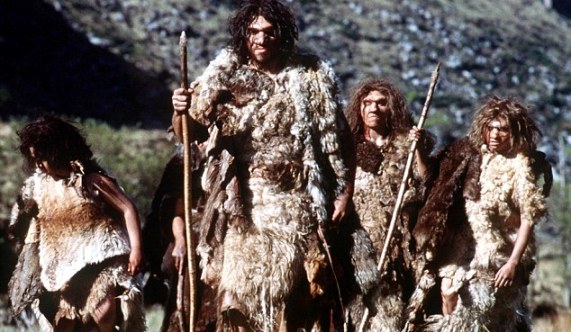
Neanderthals skillfully used fire, manufactured tools, and developed the so-called Mousterian stone industry, an advanced method of stoneworking that allowed them to produce more effective hunting and everyday tools.
Many discoveries suggest that they possessed a developed social life. They cared for elderly and injured members of their groups, indicating cooperation and solidarity. There is also evidence of ritual burials and symbolic behavior. In some graves, traces of flower pollen and objects placed beside the dead have been found, perhaps pointing to early forms of ritual or spiritual beliefs.
The existence of the Neanderthals coincided with much of the last Ice Age, when sea levels were far lower than they are today. Vast quantities of water were trapped in glaciers, creating land bridges that connected regions such as Britain to mainland Europe and Asia to North America through Beringia.
Neanderthals coexisted with Homo sapiens for several thousand years. Today we know that the two human populations not only encountered one another but also interbred. Nevertheless, around 40,000 years ago the Neanderthals disappeared. Scientists believe their extinction was caused by a combination of factors, including climate change, small population sizes, competition with Homo sapiens, and gradual absorption through interbreeding.
The Neanderthals were not “savage beasts,” as they were often portrayed in the past, but intelligent and adaptable humans who survived for hundreds of thousands of years under some of the harshest conditions of prehistoric Europe. Back to the Story of Humankind