Biography
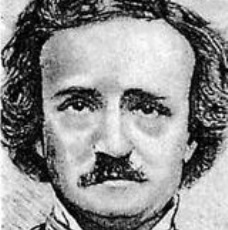
Leo Tolstoy (September 9, 1828 – November 20, 1910) was one of the greatest Russian writers and one of the most influential moral and religious thinkers of the modern era. He was born at Yasnaya Polyana, his family's large estate south of Moscow, into an aristocratic family. His father, Count Nikolai Ilyich Tolstoy, had served as an officer during the wars against Napoleon, while his mother, Maria Volkonskaya, belonged to the distinguished Volkonsky princely family.
Tolstoy lost his mother before he was two years old and his father when he was still a child. He and his siblings were subsequently raised by relatives and educated by private tutors. In 1844 he entered the University of Kazan, initially studying Oriental languages before transferring to law. He showed little enthusiasm for formal academic life, however, and left the university in 1847 without completing a degree.
He returned to Yasnaya Polyana and attempted to manage the family estate and improve the living conditions of the peasants who worked there. His efforts were largely unsuccessful, and he soon moved between Moscow and St. Petersburg, where for several years he led the life of a wealthy young aristocrat, spending his time at parties, gambling, hunting, and social gatherings. He increasingly became dissatisfied with this way of life and began keeping diaries and writing about his moral struggles and search for meaning.
In 1851 Tolstoy traveled to the Caucasus with his brother Nikolai and soon entered military service. The landscape of the Caucasus, his encounters with soldiers and local people, and periods of solitude had a profound influence on him and later provided material for several of his works. During these years he began his autobiographical trilogy, starting with Childhood, which was published in 1852.
During the Crimean War, Tolstoy served at Sevastopol and witnessed the brutality of battle at close range. His experiences inspired the Sevastopol Sketches, published in 1855 and 1856, which brought him considerable literary recognition. Rather than glorifying war, these writings presented its fear, suffering, confusion, and death with unusual realism. His experiences as a soldier would later contribute to his increasingly radical rejection of violence.
After leaving military life, Tolstoy entered the literary circles of St. Petersburg but soon became dissatisfied with the intellectual and social world around him. In 1857 he traveled through Western Europe. While in Paris he witnessed a public execution, an experience that deeply disturbed him and strengthened his distrust of governments and institutional violence.
Returning to Yasnaya Polyana, Tolstoy devoted increasing attention to education. He established a school for peasant children and developed unconventional educational methods based on freedom, curiosity, and the individual needs of the pupils rather than rigid discipline. During further travels in Europe he studied different educational systems, and in the early 1860s he helped establish several schools in the region around Yasnaya Polyana. He also published an educational journal bearing the name of his estate.
In 1862 Tolstoy married eighteen-year-old Sophia Behrs. They eventually had thirteen children, although several died in childhood. Sophia became an important part of his literary life, copying and editing manuscripts and managing many practical aspects of the household while Tolstoy worked on his major books.
The Cossacks, inspired by his years in the Caucasus, was published in 1863. Around the same period Tolstoy began working on War and Peace, which occupied him for much of the 1860s and was completed in 1869. Set largely during the Napoleonic invasion of Russia, the novel combines the lives of fictional families with historical events and philosophical reflections on war, history, freedom, and human destiny. It became one of the defining works of world literature.
His second great novel, Anna Karenina, was written during the 1870s and published in installments between 1875 and 1877. Through the tragic story of Anna and her relationship with Count Vronsky, Tolstoy explored love, marriage, family, hypocrisy, social convention, faith, and the search for a meaningful life.
After completing Anna Karenina, Tolstoy entered a profound spiritual and existential crisis. Although he possessed wealth, fame, a large family, and literary success, he became increasingly troubled by the apparent meaninglessness of life and by the contrast between his privileged existence and the poverty experienced by millions of people. His struggle, which at times brought him close to suicide, was later described in his autobiographical work A Confession.
Tolstoy gradually developed his own interpretation of Christianity, based primarily on the teachings of Jesus in the Gospels. He rejected Church dogma, religious ritual, private wealth, social privilege, and the use of violence. He emphasized simplicity, compassion, manual labor, forgiveness, love of one's fellow human beings, and non-resistance to evil through violence. Seeking to bring his life closer to these principles, he adopted simpler clothing, worked in the fields, became increasingly critical of private property, and tried to distance himself from the privileges of the aristocracy.
His new beliefs shaped works such as The Death of Ivan Ilyich, What I Believe, What Then Must We Do?, The Kreutzer Sonata, Master and Man, and The Kingdom of God Is Within You. In these writings he examined death, social injustice, wealth, sexuality, organized religion, violence, and the moral responsibilities of the individual.
Tolstoy's religious ideas brought him into increasingly serious conflict with the Russian Orthodox Church. He rejected several central doctrines of Orthodox Christianity and criticized the close relationship between Church and state. In 1901 the Holy Synod formally declared that Tolstoy had separated himself from the Orthodox Church, an action widely described as his excommunication.
His later novel Resurrection, published in 1899, offered a powerful criticism of the Russian legal system, the Church, social inequality, prisons, and the privileges of the ruling classes. During the final decades of his life, Tolstoy's moral and political writings gained an international audience. His doctrine of nonviolent resistance later influenced figures such as Mahatma Gandhi and, indirectly, Martin Luther King Jr.
Relations within Tolstoy's family became increasingly difficult, particularly because of disagreements over property, money, copyright, and his desire to renounce his wealth. In October 1910, at the age of eighty-two, he secretly left Yasnaya Polyana accompanied by his doctor, hoping to spend the remainder of his life in greater simplicity and solitude. During the journey he became seriously ill and was forced to stop at the small railway station of Astapovo. He died there on November 20, 1910.
Tolstoy was buried at Yasnaya Polyana in a simple grave without a cross or monument. His novels, stories, philosophical writings, and ideas about nonviolence, morality, social justice, and the meaning of life have continued to influence literature and political and ethical thought throughout the world.