Biography
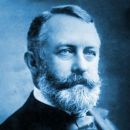
Bertrand Arthur William Russell (18 May 1872 – 2 February 1970) was a British philosopher, mathematician, logician and writer. He was also a prominent public intellectual and campaigner for peace and nuclear disarmament. He was born at Ravenscroft, near Trelleck in Wales, into an aristocratic family. His grandfather, Lord John Russell, served twice as Prime Minister. Russell’s mother and sister died of diphtheria in 1874, and his father died in 1876. After his grandfather’s death in 1878, Russell was brought up by his grandmother, Lady Russell, at Pembroke Lodge near Richmond, London. He was educated at home by tutors. When he was about eleven, his brother Frank introduced him to Euclidean geometry.
In 1890, Russell entered Trinity College, Cambridge, where he studied mathematics and philosophy. His work in logic and the foundations of mathematics led to a long collaboration with Alfred North Whitehead. Together they wrote *Principia Mathematica*, published in three volumes between 1910 and 1913.
Russell married Alys Pearsall Smith in 1894. They later became estranged and divorced in 1921. During the First World War, he opposed conscription and British participation in the conflict. His anti-war activities led to the loss of his lectureship at Trinity College in 1916. In 1918, he was sentenced to six months in prison for an article opposing the war.
In 1920, Russell visited Russia and China. The following year, he married the writer and campaigner Dora Black. They had three children and, in 1927, founded the experimental Beacon Hill School, which they ran until 1932. Their marriage ended in divorce in 1935. In 1936, Russell married Patricia Helen Spence; they had one son. He taught at several universities in the United States from 1938 to 1944.
Russell’s *History of Western Philosophy*, published in 1945, became a major success. In 1948, he survived a plane crash in Norway. He received the Nobel Prize in Literature in 1950 for his varied and significant writings in support of humanitarian ideals and freedom of thought. He and Patricia divorced in 1952, and that same year he married Edith Finch.
In his later years, Russell campaigned against nuclear weapons. He helped issue the Russell–Einstein Manifesto in 1955, became president of the first Pugwash Conference in 1957 and was a founding president of the Campaign for Nuclear Disarmament in 1958. In 1961, at the age of 89, he was imprisoned for a week after taking part in an anti-nuclear protest in London. In 1966, he helped establish the International War Crimes Tribunal, which examined allegations concerning the Vietnam War.
Russell died in Wales on 2 February 1970, aged 97.