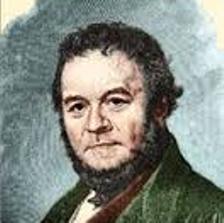
Biography
Pablo Neruda (1904–1973), the pseudonym of Ricardo Eliécer Neftalí Reyes Basoalto, was a Chilean poet, diplomat and politician, widely regarded as one of the most important Latin American poets of the twentieth century.
He was born on July 12, 1904, in Parral, Chile. His father was a railway worker and his mother a schoolteacher who died shortly after his birth. A few years later, his father moved with him to Temuco in southern Chile, where he remarried. Neruda began writing poetry at an early age. His father disapproved of his literary ambitions, and the young poet began publishing under the name Pablo Neruda, which he would later adopt legally.
After finishing school in Temuco, where he had already read extensively and published poems in newspapers and magazines, he moved to Santiago in 1921 to study French at the University of Chile. During these years he devoted himself increasingly to poetry. His early collections quickly attracted attention, and *Twenty Love Poems and a Song of Despair*, published in 1924, established him as one of the most promising young poets in the Spanish-speaking world.
Despite his growing literary reputation, Neruda struggled financially and entered the Chilean diplomatic service. From 1927 onward he held consular posts in several countries and cities, including Burma, Ceylon, Java, Singapore, Buenos Aires, Barcelona and Madrid. His years abroad profoundly influenced both his life and his poetry.
While living in Spain during the 1930s, Neruda became close to writers such as Federico García Lorca. The Spanish Civil War, the murder of Lorca and the political upheavals of the period strengthened Neruda's political commitment and moved his poetry increasingly toward social and political themes. He later joined the Communist Party of Chile. This development reached one of its fullest expressions in *Canto General*, his vast poetic portrayal of the history, landscape and peoples of Latin America.
Neruda married Maria Antonieta Hagenaar while living in Asia, but their marriage eventually ended. During his years in Spain he became involved with the Argentine artist Delia del Carril, who later became his second wife. He subsequently began a relationship with the Chilean singer and writer Matilde Urrutia, whom he eventually married in 1966.
Alongside his literary career, Neruda became increasingly active in Chilean political life and was elected to the Senate as a member of the Communist Party. After the Chilean government outlawed the Communist Party in 1948, a warrant was issued for his arrest. Neruda went into hiding and eventually escaped across the Andes into Argentina before travelling to Europe.
He returned to Chile in 1952 and continued writing poetry that ranged from political and historical subjects to love, nature and the simplest objects of everyday life. His international reputation continued to grow, and his work was translated into numerous languages.
In 1970 Neruda briefly became the Communist Party's candidate for the Chilean pres