Biography
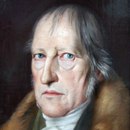
Georg Wilhelm Friedrich Hegel (1770–1831) was a German philosopher, one of the leading representatives of German Idealism, and one of the most influential thinkers in the history of Western philosophy. He was born on 27 August 1770 in Stuttgart. His father was an official in the Duchy of Württemberg, while his mother came from a distinguished legal family. From an early age, he showed a strong interest in natural sciences, ancient languages, history and literature. He studied at a theological seminary but later turned away from theology and received a degree in philosophy in 1790. In 1793 he began working as a tutor. After the death of his father in 1799, he gained greater financial independence and was able to devote himself more fully to philosophy and writing.Hegel became known in philosophical circles through his writings on the German Constitution and, above all, through his major work Phenomenology of Spirit, published in 1807. Between 1812 and 1816 he published his three-volume Science of Logic. In 1816 he became Professor of Philosophy at the University of Heidelberg. In 1821 he published Elements of the Philosophy of Right, his major work on political philosophy. His reputation grew enormously, and students travelled from throughout Germany to attend his lectures. In Berlin he became one of the most prominent philosophers of his age. In 1829, at the height of his career, he became rector of the University of Berlin. He died in Berlin in 1831.
Hegel called Plato a 'world-historical individual', recognizing his exceptional importance not only in the history of philosophy but also in world history as a whole. 'With Plato philosophical science begins as science', he stated in his lectures. Hegel's engagement with Plato lasted throughout his life and appears in his systematic works, including Phenomenology of Spirit (1807), Science of Logic (1812–1816), and Encyclopaedia of the Philosophical Sciences (1817), as well as in his Lectures on the History of Philosophy. Hegel was initially attracted to a wide range of Platonic themes, including the problem of myth and its relationship to traditional religion, Socrates, the state as a living form of ethical community, the idea of a 'pure' morality independent of the senses, and the cosmology of the Timaeus. Gradually, his interest focused on the dialogues of Plato's mature period and on the dialectical ontology of the Ideas.


