Biography
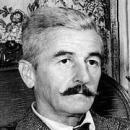
William Faulkner (25 September 1897 – 6 July 1962) was an American novelist and short-story writer whose experiments with voice, memory and time transformed twentieth-century fiction. Rooted in Mississippi, his work explores family conflict, racial injustice, inherited guilt and the difficult relationship between individuals and the histories they carry.He was born in New Albany, Mississippi, and grew up in Oxford. Although he left high school without graduating, he read widely and developed an early interest in poetry and drawing. His friend and mentor Phil Stone encouraged his literary ambitions. In 1918 he enlisted in the British Royal Air Force and trained in Canada, but the First World War ended before he saw combat. He later attended the University of Mississippi without completing a degree and supported himself through a succession of jobs, including work as a postmaster.
His first book, the poetry collection The Marble Faun, appeared in 1924 with financial help from Stone. During his time in New Orleans, contact with Sherwood Anderson and other writers encouraged his development as a novelist. Soldiers’ Pay, his first published novel, appeared in 1926. He subsequently turned increasingly towards the Mississippi world he knew, creating the fictional Yoknapatawpha County, a setting whose families, conflicts and remembered events would recur across his books.
The Sound and the Fury (1929) marked a decisive artistic achievement, presenting the decline of the Compson family through radically different narrative perspectives. That year he married Estelle Oldham. While working night shifts at a power plant, he wrote As I Lay Dying (1930), later describing its composition as a six-week undertaking. Sanctuary (1931) brought wider public attention, followed by Light in August (1932) and Absalom, Absalom! (1936), works that deepened his exploration of violence, exclusion and the burdens of Southern history.
Literary achievement did not immediately bring financial security. Faulkner sold stories to magazines and worked intermittently as a Hollywood screenwriter, collaborating with director Howard Hawks. His home in Oxford, Rowan Oak, remained central to his life. His later fiction included Go Down, Moses (1942), Intruder in the Dust (1948) and the concluding volumes of the Snopes trilogy. His private life was troubled by alcohol dependence and family tensions, but he continued to write across several decades.
He received the Nobel Prize in Literature for 1949 at the ceremony in 1950. A Fable earned the 1955 Pulitzer Prize for Fiction. He died in Byhalia, Mississippi, on 6 July 1962, aged sixty-four. His final novel, The Reivers (1962), received a second Pulitzer posthumously in 1963.


