PREVIOUS NEXT

4.5 BILLION YEARS AGO
The early Earth was a fiery sphere of molten rock, surrounded by gases released through intense volcanic activity. Over millions of years, as the planet gradually cooled, water vapor condensed in the atmosphere and formed dense clouds. Torrential rains fell continuously for vast periods of time, eventually filling low regions of the cooling crust and forming the first oceans.4 BILLION YEARS AGO
About 90% of Earth’s surface was covered by oceans, while small volcanic islands emerged and disappeared through ongoing tectonic and volcanic activity. The iron-rich seas probably appeared dark green, and the atmosphere contained large amounts of carbon dioxide, methane, and water vapor, with almost no free oxygen. Temperatures were far higher than today, although the exact values remain uncertain.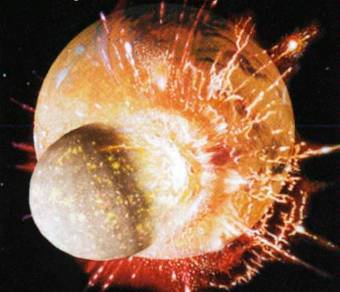
3.5 BILLION YEARS AGO
Intense underwater volcanic activity contributed to the formation of Earth’s earliest stable rocks and primitive continental crust. At the same time, volcanic eruptions, lightning, ultraviolet radiation, and chemical reactions in the oceans created conditions favorable for the formation of complex organic molecules such as amino acids and nucleotides — essential building blocks of life. Over long periods of time, these molecules accumulated in the ancient oceans and participated in increasingly complex chemical reactions.2.5 BILLION YEARS AGO
Deep within the oceans, near hydrothermal vents and shallow coastal environments, primitive microscopic life forms evolved. Among the most important were stromatolites — layered structures created by colonies of microorganisms, especially cyanobacteria. These organisms gradually transformed Earth’s atmosphere through photosynthesis, releasing oxygen into the oceans and eventually into the atmosphere. Over hundreds of millions of years, oxygen levels slowly increased, while carbon dioxide levels decreased significantly. This process eventually changed the appearance of Earth’s skies and oceans and paved the way for the evolution of more complex life forms. Stromatolites, among the oldest known evidence of life on Earth, can still be found today in places such as Shark Bay in Australia.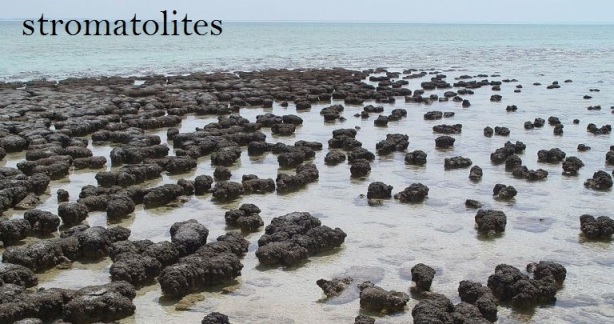
Back to the Story of Humankind