Biography
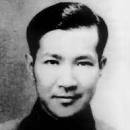
Xian Xinghai or Sinn Sing Hoi (Chinese: 冼星海, 1905 - 1945) was a Chinese composer, one of the pioneers in his country who, influenced by Western music, influenced many later Chinese musicians. He was born on June 13, 1905, in Macau, Portuguese at the time, in 1905. His father had died before his birth and his mother had many diffculties and raised him with many deprivations. At the age of six he moved to Singapore where Xian went to primary school. TOne of his teachers there, recognized an innate musical talent and enrolled him in the school's military band. Xian received training in both musical instruments and music theory.
In 1924 he studied at Saint Andrew's School in Singapore and in 1926 he joined the National Music Institute at Peking University to study music; in 1928 he entered the Shanghai National Conservatory of Music to study violin and piano. In 1929 he went to Paris and in 1934 became the first Chinese student to be admitted to the Paris Conservatory, in orser to study advanced composition.
Xian returned to China in 1935, specifically to Japanese-occupied Manzuria. He used his music as a weapon to protest against the occupation, he took part in patriotic activities during the Sino-Japanese War (1937-1945), he wrote vocal works that encouraged people to fight the Japanese invaders.
It was at that time that he composed his most famous work, the Cantata of the Yellow River. In 1940, he went to the Soviet Union to compose the music for a documentary, but the German invasion of the Soviet Union halted his work and he tried to return to China, but was barred in Kazakhstan. In 1945 he became seriously ill and was sent to hospitals in Moscow where he died in October of the same year.
During his career, Xian composed two symphones, a violin concerto, four large-scale choral works, almost 300 songs and an opera. He is best known for the Yellow River Cantata on which the Yellow River Concerto for piano and orchestra is based.