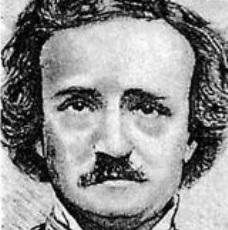
Biography
Miguel de Unamuno was a Spanish writer who worked in major literary genres, including novels, poetry, plays, and essays. He is best known for *The Tragic Sense of Life* (1913) and *The History of a Passion* (1917).
He was born on 29 September 1864 in Bilbao, Spain, and grew up in a Catholic household. He studied eleven languages and philosophy at the University of Madrid, earning his Ph.D. in 1884. In 1891, he became a professor of Greek at the University of Salamanca. He later served as rector of the university from 1900 to 1924. In 1924, during a period of intense political upheaval, he was removed from his position and went into exile in France. Following the end of General Primo de Rivera’s rule, he returned to Spain in 1930 and resumed his position as rector of the University of Salamanca.
Unamuno began his literary career with fiction and, in his early forties, turned increasingly to poetry. His work explored themes such as death, time, the uncertainty of God, and spiritual conflict. He published his first collection of poetry, *Poesías* (*Poems*), in 1907, addressing religious conflicts in Spain, domestic life, and the social upheavals that would later permeate much of his poetry.
He also wrote numerous plays dealing with philosophical subjects. He explored questions of individual faith and spiritual identity in notable works such as *The Sphinx* (1898) and *Truth* (1899).
Miguel de Unamuno died on New Year's Eve, 31 December 1936, in Salamanca, Spain.