Biography
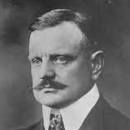
Jean Sibelius (1865 - 1957) was a great Finnish composer, who is considered a national hero in his country as he inspired the Finns with music to gain national status and independence from the Russians.
He was born on December 8, 1865, in the city of Heminlina in Finland, which at that time was an autonomous part of the Russian Empire to Swedish parents. From an early age he became interested in music and learned to play the violin. In 1885, he began studying law at the University of Helsinki, through his university friends and the music circles he formed, Jean discovered his true inclination, abandoned law to devote himself to music. At the age of 25 he continued his musical studies in Berlin and later in Vienna, where he would develop from the field of chamber music into a symphony orchestra and would become a major reviver of symphonic music and symphonic poetry. His source of inspiration was the myths of the rich Finnish tradition, as well as the epic poem "Kalevala", one of the greatest works of Scandinavian literature. In 1899 he wrote the "Song of the Athenians" (Aternanes Sang) in poetry by Victor Reidberg, which praises the courage and spirit of independence of the ancient Athenians, in order to arouse the patriotic feeling of the Finns.
In 1892 he returned to his homeland and wrote the symphonic poem "Koulevro", for which he received a lifelong grant from the Finnish government. In 1904 he retired to a farm, where he composed most of the works. The most famous and important are his 7 symphonies, his 4 symphonic poems and "Finland", with which Sibelius became known all over the world. In addition, he will write about 100 solo songs, various plays for the theater, concerts, sonatas for violin, piano and strings.
He died at the age of 91, on September 20, 1957, in his farmhouse.