Biography
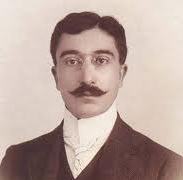
Shaaban Robert (1909-1962) was a Tanzanian poet, writer and thinker, considered by many as the most important writer of the Swahili language.He was born on January 1, 1909, in the tiny village of Vibamba south of the German-occupied East Africa city of Tanga. Not much is known about his childhood, it is said that the name Robert was given at the request of his father's German employer, whose name was Robert.
From 1922 to 1926 he was educated in the capital Dar es Salaam and received a high school diploma under the British colonial education system as the British had expelled the Germans by then.
Shaaban worked in various positions as a civil servant in the colonial government, such as in the Income Tax Department, in the Wildlife Department, in a research office, and he lived in many different parts of the country. He became known for his poetry, but he also wrote biographies, essays and fiction. The biography of the singer Siti binti Saad, who was famous throughout East Africa and as far as India, was a great success; he expressed with that book his support in the struggle for women's rights in a male-dominated Islamic society.
In his works he described, among other things, the process of developing both individual and national autonomy in a colonial oppressive regime. He considered as his most important work (published posthumously) the "Epic for the War of Freedom" where in 3,000 rhymes he described the effects of World War II in Africa. As a member of Tanga City Council, he was committed to rebuilding the nation and he contributed to the choice of Swahili as the national language of Tanzania and the official language of Kenya.
Shaaban had been married three times and had been widowed twice. His first wife, Amina, died at a very young age and he wrote one of his most famous poems, which he named it after her. He had a total of ten children, of whom only five were alive when he died on June 22, 1962, one year after Tanganyika's independence and two years before Tanganyika and Zanzibar were united to form Tanzania.