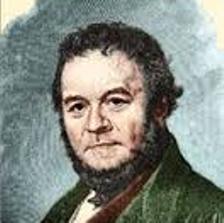
Biography
François de La Rochefoucauld (September 15, 1613 – March 17, 1680) was a French writer and moralist, best known for his Maxims, a collection of penetrating reflections on human nature, self-interest, love, friendship, virtue, and ambition.
Born in Paris into one of France’s oldest noble families, La Rochefoucauld entered military and court life at a young age. During the 1630s, he took part in military campaigns and became involved in the political intrigues surrounding the royal court. His association with the Duchess of Chevreuse and his opposition to Cardinal Richelieu led to his brief imprisonment in the Bastille in 1637, followed by exile to his family estate at Verteuil.
After Richelieu’s death, La Rochefoucauld remained deeply involved in the political struggles of his time. He later became an important participant in the Fronde, the series of civil conflicts that challenged royal authority during the minority of Louis XIV. He fought alongside the Prince of Condé and took part in several military engagements. He was wounded at the siege of Mardyck in 1646 and, more seriously, at the Battle of the Faubourg Saint-Antoine in 1652, where a shot to the head temporarily threatened his eyesight.
After the defeat of the Fronde, La Rochefoucauld withdrew for several years from active political life and spent time at his estate in Verteuil. Gradually, he returned to Parisian society and became closely associated with some of the leading literary salons of the period, particularly those of Madame de Sablé and Madame de La Fayette.
His Memoirs were published in 1662 and offer a personal account of the political intrigues and conflicts in which he had participated. His literary reputation, however, rests primarily on the Maxims. The first authorized edition appeared in 1665 and was revised and expanded several times during his lifetime.
In the Maxims, La Rochefoucauld examines human behavior with remarkable psychological insight, frequently suggesting that self-interest, vanity, and self-love lie behind even apparently virtuous actions. His concise and often paradoxical observations made him one of the greatest French moralists of the seventeenth century and have remained influential for their sharp understanding of human motives and contradictions.
La Rochefoucauld spent his later years in Paris, surrounded by literary friends and increasingly withdrawn from political affairs. He died there on March 17, 1680, at the age of sixty-six.