Biography
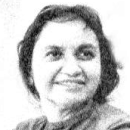
Violeta Parra (Spanish: Violeta del Carmen Parra Sandoval) (1917 – February 5, 1967) was a Chilean singer, composer, lyricist and folklorist, a traditional artist not only of Chile but of the whole of Latin America; her song Gracias a la vida ( Thanks to Life), is one of the best-known of Spanish-language music.
She was born on October 4, 1917 in a poor village, San Fabián de Alico, Chile. She was one of nine children in her family, her father was a music teacher, her mother sang and played the guitar and taught Violeta and her siblings traditional folk songs. Among her siblings were the important poet, Nicanor Parra (1914–2018) and the folklorist Roberto Parra (1921–1995).
Violetta Parra's family lived in poverty and moved constantly throughout her childhood in search of work. Violeta began singing and playing the guitar, along with her brothers, and soon began composing traditional Chilean music. After her father's death in 1929, the family's living conditions became difficult, both Violetta and her siblings had to work. In 1932, at the insistence of her brother Nicanor, despite financial difficulties, she moved to Santiago to attend High School. She began performing with her brothers in nightclubs and in 1934, she met and married a railroad driver, with whom she had two children. Her husband was a communist and at his side Parra became involved in the Communist Party of Chile.
In 1948, after ten years of marriage, they divorced. She will remarry and have another daughter. She will continue to appear with her brothers at clubs and events. In 1952 with the encouragement of her brother Nicanor, she began traveling the country in order to collect authentic Chilean folk music. She abandoned her old repertoire of folk songs and began to compose her own songs based on traditional folk forms which met with great success. She gave recitals at universities, taught folklore classes, got her own radio show.
Parra composed "Gracias a la Vida" in La Paz in 1966. In 1971 the song was popularized throughout Latin America by Mercedes Sosa, and later in Brazil by Elis Regina and in the US by Joan Baez.
In 1967, on February 5, and while at the height of her glory, she shot herself and died.


