Biography
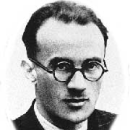
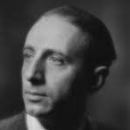
Giannis Papaioannou (1910-1989) of Andreas was a Greek composer, one of the most important of the 20th century. He was born on January 9, 1910 in Kavala. His grandfather was an important musicologist of the 19th century, Giannis began his musical studies at the age of six by studying piano. Later he studied at the "Hellenic Conservatory" from where he graduated in 1934 with a degree in piano, theory and composition. In 1949-50 as a UNESCO Fellow he visited major music centers in Europe in order to follow the latest synthetic trends and worked for a year in Paris. In the decade 1951-61 he taught History of Music at the National School of Anavryta while from 1954 to 1976 he was a professor of Advanced Theory and Composition. Characteristic of his lessons was the personal relationship he developed with his students. His didactic work is considered particularly important, since he was the first - and for a long time the only one - in Greece to teach, alongside traditional and modern composition techniques.He started writing music at the age of 14, but he destroyed most of these early works, considering them prototypes Some of his most characteristic works are The Fantasy for Violin and Piano (1936), the 14 children's portraits ( 1960), Pegasus (1984), Koursariko Choroi (1950), Germa (1961), Three songs in poetry by K.P. Cavafy (1974), Two songs in the poetry of Lord Byron (1989), Enigma (1969), Oraculum (1965), Waltz of the White Roses (1950), Odaliski (1937), Winter Fantasy (1951), 24 preludes for piano and much more .
With his work and his teaching, Giannis A. Papaioannou has had a great influence on the modern Music School of Greece and can be considered as one of the most important Greek composers of the 20th century. Most of the important Greek composers, musicologists and conductors of the younger generation were his students..
He died on May 19, 1989.