Biography
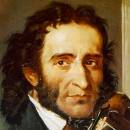
Niccolo Paganini (1782-1840) was a violinist, guitarist and composer, one of the most famous master violinists of all time.
Born on October 27, 1782, in Genoa, Italy, his father was a dock worker and an amateur musician who wanted a different life for his son, so he forced him to study music from morning till night. He taught his son the mandolin from the age of five and at the age of seven he switched to the violin. Nikolo showed great musical talent and won numerous scholarships. He took violin lessons from famous violinists, managing to quickly surpass the skills and technique of his teachers. At the age of 12 he will give his first concerto, while he had already started writing his own compositions. At the age of 15 he would tour with his father in Lombardy and at the age of 18 he became the first violinist in the Republic of Lucca, an Italian city near Tuscany. When he left his paternal home breaking the bonds of his father, his life took another turn. The quick reputation he gained, led him to exaggerations and a life of gambling and alcohol. From 1805 to 1808, he was a musician in the service of Napoleon's sister, Eliza Bonaparte. During the same period he wrote 24 Caprices for solo violin, one of his most famous works.
In 1828, he toured abroad for the first time, making his first appearance in Vienna and then, in 1831, in Paris and London. His stage presence in European cities was extremely fiery and dynamic, especially for the data of classical music as he behaved like the rock stars of the following centuries, reaching the point of breaking the strings of his violin and continuing the execution of the work, resulting in to elicit the admiration and applause of the audience.
After the concert in Vienna, a rumor spread that Paganini had a relationship with the devil. This fame could be related to his slender appearance, thin cheekbones, short hair and black clothes as well as his performance on the violin with frequent outbursts. The violin was considered the devil's favorite musical instrument and these rumors spread throughout Europe.
Throughout his life, Paganini suffered from persistent illnesses, most likely suffering from a rare inherited connective tissue disorder that affects many organs of the body. In early 1822, he was diagnosed with syphilis and in 1834, in Paris, he contracted from tuberculosis. After that, and indeed depressed, he stopped touring and retired to the south of France where he taught violin lessons. On May 27, 1840, he passed away, rumors about his agreement with the devil, prevented the burial of his body for five whole years.
Paganini left behind a legendary legacy, brought a new, revolutionary air to the technical interpretation of the violin, influenced many later composers such as Liszt, Brahms, Schumann. He did not need to read scores while playing and established the institution of the autonomous musician, thus paving the way for the concept of soloist.