Biography
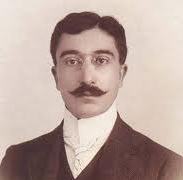
Dashdorjiin Natsagdorj (Mongolian: Дашдоржийн Нацагдорж; 1906–1937) was a Mongolian poet, writer, playwright and translator, widely regarded as one of the founders of modern Mongolian literature.He was born in Mongolia in 1906 and received much of his early education through private tutoring. Still very young, he learned traditional Mongolian writing and began working as a scribe. During the political and cultural transformation that followed the Mongolian Revolution of 1921, Natsagdorj became involved in public and literary life.
From 1925 he studied abroad, first in Leningrad and later in Germany. Between 1926 and 1929 he spent much of his time in Berlin and Leipzig, where he encountered European literature, languages and scholarship. His years in Germany had an important influence on his intellectual development and literary work.
After returning to Mongolia in 1929, Natsagdorj worked as a writer, journalist, translator and researcher. He wrote poetry, short stories and plays, while also translating European and Russian authors into Mongolian. His best-known poem, "My Homeland" (Minii Nutag), celebrates the landscapes and people of Mongolia and became one of the most famous works of modern Mongolian poetry.
Natsagdorj was also the author of "Three Fateful Hills" (Uchirtai Gurvan Tolgoi), a dramatic work that later became one of Mongolia's best-known operas. His writing combined traditional Mongolian literary forms with new influences from European literature and the rapidly changing society around him.
His life coincided with an increasingly repressive political period. He was arrested in the 1930s and experienced political persecution during the years preceding the Stalinist purges in Mongolia. He died in Ulaanbaatar in 1937, at only thirty years of age.