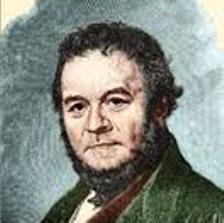
Biography
Montesquieu (Charles-Louis de Sekonta, Baron of Brent and Montesquieu) was a French writer and philosopher who influenced the work of the political and social organization of Europe. Born on January 18, 1689 near the city of Bordeaux, he studied law and then elected councilor in the local parliament of Bordeaux. In 1716 he inherited the great fortune of his parents and later the title, the property and the tenure of judicial chair of and uncle who was baron. He spent his years studying and writing and in 1721 published under a pseudonym the Persian Letters where he criticized French society through the letters of two Persians. In 1728 he was elected member of the French Academy, and then he left for a long trip around Europe. During these trips he studied Geography, Economy, Politics and customs of the countries he visited. In the years 1729-1730 he stayed in England and in 1731 he returned to France and wrote “The Spirit of the Laws” where he analyzed contemporary and previous laws, describing the different types of government: democracy, monarchy, despotism. In this work is laid the fundamental principles of Economic and Social Sciences. The project was very successful, but suffered severe criticism as well, so he wrote and published in 1750 the Defense of the Spirit of Laws. He died five years later form high fever, having previously lost his sight.Montesquieu in his work argued that the climate affects the political behavior of people, that there is no perfect form of government suitable for all peoples and in all circumstances, that abuse of power is a natural human tendency, so each person in power tends to degenerate into despotic. Very important was the separation of authorities he made, distinguishing them into legislative, executive and judicial.