Biography
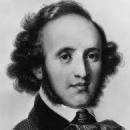
Felix Mendelssohn (Jakob Ludwig Felix Mendelssohn Bartholdy, 1809-1847) was a German composer, pianist, conductor and music teacher of the early Romantic period. He was born on February 3, 1809 in Hamburg, into a wealthy and cultured Jewish family of the city, who embraced Lutheranism to avoid the anti-Semitic climate of the time. His father's name was Abraham and he was a banker and his maternal grandfather Moses was a poet and philosopher. In 1811 the family moved to Berlin, where the young Felix began to learn the piano with his sister Fanny who would also become a great pianist and composer. Mendelssohn's first public appearance took place in Berlin in 1818, at the age of 9. In 1825 and at the age of 16, he wrote the "Octet for Strings", and the following year presented the "Introduction to a Midsummer Night's Dream", a pioneering composition full of elegance and charm. Sixteen years later he wrote music for the same work which also includes the popular Wedding Passage.Mendelssohn A Midsummer night's dream op.61
Mendelssohn possessed an amazing memory and could conduct entire works from memory. In the spring of 1829 he made his first trip to Great Britain, and in the summer he visited Scotland, where he was inspired by "Introduction: Hebrides" and "Symphony no. 3", also known as "Scottish". From 1830 to 1832 he traveled to Germany, Austria, Italy and Switzerland, to end up again in London, where he was particularly popular. There he first presented the "Agreement no. 4", also known as "Italian", one of his most popular works
Agreement no. 4
In 1835 he took over the direction of the Leipzig orchestra, which he raised it to a first-class orchestra. In Leipzig he became friendly with Chopin, Liszt and Schumann and the city became the musical center of Germany. In 1836 he met a 16-year-old girl whom he married and lived with her a quiet and happy family life with their five children. The following year he began the "Violin Concerto", which occupied him for six years, an unusual fact as he usually completed his works with great ease.
Mendelssohn Violin Concerto in E Minor OP.64
The death of his beloved sister Fanny in May 1847 took a toll on him. On 4 November 1847 he died in Leipzig of a stroke, like his grandfather, father and sister.