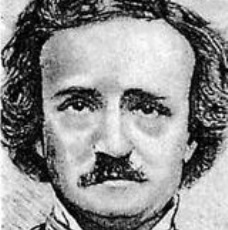
Biography
Edgar Lee Masters (23 August 1868 – 5 March 1950) was an important American poet, biographer, novelist, and playwright. He was born in Kansas and spent most of his childhood in Illinois. His father was a lawyer and local politician who discouraged his son's desire to pursue classical studies and instead pushed him toward a legal career. Masters successfully passed the bar examination and began practicing law in his father's office, but disagreements between them led him to move to Chicago, where he became a partner in the law firm of the famous attorney Clarence Darrow.
By that time, Masters had already begun publishing poems and short stories in newspapers and literary magazines. In Chicago he became involved in the city's literary circles and contributed to the magazine *Poetry*. In 1898 he married Helen Jenkins, the daughter of a fellow lawyer, and the couple had three children.
In 1911 Masters established his own law practice, and in 1915 he achieved national fame with the publication of *Spoon River Anthology*. This collection consists of 243 interconnected poems in which the deceased inhabitants of the fictional town of Spoon River recount their lives from beyond the grave. The work was praised as one of the most original achievements in American literature. Masters drew inspiration from *Select Epigrams from the Greek Anthology*, translated by J. W. Mackail, a collection of funerary poems written between the seventh century BC and the tenth century AD.
Following the success of *Spoon River Anthology*, Masters devoted himself increasingly to literature, publishing poetry, biographies, novels, and plays. His personal life, however, was often troubled. Extramarital affairs and family conflicts led to a highly publicized divorce, attracting criticism from the Chicago press and damaging his legal career. As a result, he moved to New York, where he gradually abandoned law in order to devote himself entirely to writing.
In 1924 he married Ellen Coyne, who was considerably younger than him. Because of her teaching career, the couple often lived apart, with Masters dividing his time between New York and various locations where she worked. Their marriage eventually ended in divorce in 1935. The following year he published his autobiography.
In his later years, Masters suffered from poor health after contracting pneumonia. He spent his final years in a nursing home in Melrose Park, Pennsylvania, where he was occasionally visited by his former wife after they had reconciled. He died in 1950, leaving behind an impressive body of work that included twelve plays, twenty-one poetry collections, six novels, and six biographies, among them studies of Abraham Lincoln and Mark Twain.