Biography
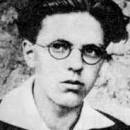
Srečko Kosovel (18 March 1904 – 27 May 1926) was a Slovenian poet and one of the most distinctive voices of early twentieth-century European modernism. Although he died at only twenty-two, he left behind more than a thousand poems and an unusually rich literary legacy.Kosovel was born in Sežana and grew up in the nearby village of Tomaj, in the Karst region. His father was a teacher, and literature, music and the arts formed an important part of family life. He began writing poetry at an early age.
His childhood was deeply marked by the First World War. The nearby Isonzo Front brought destruction and displacement to the region, while after the war the Slovenian Littoral, including the area where Kosovel had grown up, was annexed by Italy.
Kosovel moved to Ljubljana for his secondary education and in 1922 enrolled at the University of Ljubljana, where he studied Romance studies, Slavic studies and philosophy and also attended lectures in comparative literature and art history.
He became highly active in the literary life of his generation, editing and contributing to literary journals and participating in discussions about art, society and the future of Europe. His poetry developed rapidly from impressionistic and lyrical beginnings toward Expressionism and, most notably, Constructivism.
Kosovel wrote about the crisis of European civilization, war, social injustice, dehumanization and the possibility of a more humane future. His experimental poems, often known as "cons" or constructivist poems, combined words, symbols, typography and fragmented images in ways that were remarkably innovative for Slovenian literature.
In 1926, after becoming ill, he returned to Tomaj. He died there on 27 May 1926, before completing his university studies and before publishing a collection of poetry during his lifetime.
His first collection, "Pesmi", appeared posthumously in 1927. Much of his more experimental poetry became widely known only decades later, particularly with the publication of "Integrali '26" in 1967.