Biography
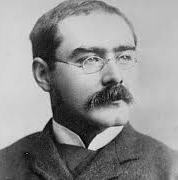
Joseph Rudyard Kipling (December 30, 1865 - January 18, 1936) was a British author and poet, best known for his children’s stories such as "The Jungle Book" and poems like "If". Born in Bombay, India, his father was a sculptor and curator at the museum in Lahore; Rudyard lived happily with his family until the age of 6. In 1871, he and his 3 years old sister were sent to England, to live with a couple who boarded children of British citizens who served in India. They lived in Southsea Portsmound, experiencing cruelty and neglect as he described in his tale “Baa, Baa black sheep” and recalled with horror in his autobiography, 65 years later. When he was 12, he was revealed from the horrible couple and attended a boarding school where conditions were much better and the director encouraged his literary tendency. In 1882 he returned to his parents in Lahore and started working as a newspaper correspondent traveling throughout India. At the same time he started writing stories; in 1888 he published six of them, including the famous "The Man who would be a King".In 1889 he began a long journey back to England, crossing Burma, China and Japan. He went to the United States and travelled from one side to another, finally crossed the Atlantic and reached London. In 1892 he married the sister of an American friend who had died suddenly. During their honeymoon the bank in which he had his money went bankrupt; they barely managed to get to Vermont, his wife hometown, in United States. They lived there four years, had two daughters and Kipling started to write stories about Mowgli and animals, which later grew into the two Jungle Books. They returned in 1896 to England, in 1897 they had a son but in 1899, their oldest daughter died. The following years, Kipling continued to write stories and poems, he became friends with the King of England George E’, he collected money for the war against Boers with the poem "The Absent-Minded Beggar". In 1907, at the age of 42, he was awarded the Nobel Prize for Literature; In 1910, at the top of his fame he published the famous poem "If" which is a list of exhortations to his son. Five years later, his son was killed in a battle during the First World War, filling him with remorse as he was the one who insisted on his classification as an officer. Kipling believed in the unbeatable British Empire, he was in favor of the colonial conquest, but he hadn’t realized that people are killed in wars. It was after his son death that he wrote: "If any question why we died, tell them because our fathers lied to us". Kipling rejected the title of Knight (Sir), and the joining the Royal Order of Merit, he accepted though the title of honorary doctor of some British universities. Until the end of his life he traveled extensively, particularly in Africa and continued to write but without the previous success.
In 1935 a magazine mistakenly announced his death, Kipling wrote to them: "I just read that I am dead. Do not forget to remove me from your list of subscribers." He died in 1936 of perforated peptic ulcer.