Biography
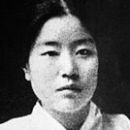
Na Hye-sŏk (1896–1948) was a feminist writer, painter, and advocate for equal rights for women. She has created over three hundred paintings and won numerous awards at art exhibitions; she also wrote articles, short stories and poems, as well as Korea's first feminist story, Kyonghui, conveying the message that education is important to stop Korean society from perceiving women as inferior beings.Na was the daughter of a wealthy Korean family and graduated from the Tokyo Women's College of Arts in 1918 as the first Korean woman to receive a Bachelor of Arts in Western painting. Returning to her homeland, she joined the independence movement and on March 1, 1919, when peaceful demonstrations in Seoul and Pyongyang quickly turned bloody, with many protesters being killed, Na was arrested as a protester and was imprisoned for six months.
After her release in 1919, along with four other women, they started a new magazine aimed at awakening women. The five women were from elite, affluent families and had the rare opportunity to go to college, where they were exposed to radical ideas and policies. The Japanese who tried to eradicate thousands of years of Korean culture by banning the use of the Korean language even in private homes and forcing Koreans to take Japanese names banned the magazine after only four issues, but by that time, Na had become a favorite of the media in Korea, especially among intellectuals and political radicals. Her artistic career took off in 1926, when one of her paintings won the highest award at the Chosun Exhibition. She embarked on a world tour showcasing her work, married a wealthy man, had four children and went on painting and writting.
In 1931, at the height of her fame, her husband accused her of having an affair with a religious leader and divorced her. In 1934, she published an article in response to rumors of her personal life entitled "A Divorce Confession". In it, she described the events with great sincerity, admitting that as her husband had not satisfied her for years, she fell in love with someone else. She thought that she would win the sympathy of the people, in fact he gave Korean society even more reasons to outcast her.
Na lost her fame, her money, her children, her career, even her lover, and lived the rest of her years as an outcast. She died on December 10, 1948 in a hospital for the needy. As she had no one to take care of her in her last days, the location of her grave is unknown. Her fate was often used to scold young Korean women who had literary or artistic ambitions. "Do you want to be like Na Hie-suk?" was a frequent rebuke to daughters and younger sisters. In the late 1990s, Na was restored by scholars of Korean literature and art historians, and eventually by the Korean government itself.


