Biography
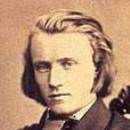
Johannes Brahms (1833 – 1897) was a German composer, pianist and conductor, one of the most important musicians of the 19th century. He was born in Hamburg on May 7, 1833 in a poor family. His father was a double bass player and made sure that he received the best musical education. His acquaintance with the Schuman couple helped him to develop musically, the renowned Schuman at that time was the first to consider him a musical genius.
In 1855, Brahms began performing as a pianist. He held the post of conductor at the princely court of Detmold, and in 1859 founded and took over the direction of a women's choir in Hamburg. In 1863 he settled in Vienna where he spent the rest of his life composing many masterpieces in almost all musical genres - except opera -: four symphonies, four concertos, two serenades for orchestra and two introductions, the "German Requiem", several songs, large volume of works for chamber music, the Haydn variations for orchestra, the Handel and Paganini variations for piano, dozens of works for piano (it was his favorite instrument), but also works for church organ. Particularly popular even today are the "Hungarian Dances" for four hands, which after Brahms saw many orchestrations. The composer never married. During their friendship with the Schumanns, it was widely rumored that Brahms and Schumann's wife were deeply in love, most likely their relationship was never consummated.
Brahms died of liver cancer in Vienna on April 3, 1897. His funeral was attended by thousands of admirers from all over Europe.