Biography
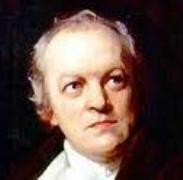
William Blake (November 28, 1757 – August 12, 1827) was one of the most important English poets of the 18th century; he was also a painter, engraver, and illustrator. He was born in London, the third of five children of a merchant. At the age of ten, he left conventional schooling to attend a drawing school. At twelve, he began writing poetry while claiming to experience ecstatic visions. At fifteen, he became an apprentice to one of London's most respected engravers, with whom he trained for seven years, before continuing his studies at the Royal Academy of Arts.
In 1782, he married Catherine Boucher, a poor and illiterate young woman. Blake taught her to read, write, and engrave, and she became his lifelong companion, assistant, and supporter through many years of poverty and hardship. In 1783, his first collection of poems, *Poetical Sketches*, was published. After his father's death in 1784, he opened a print and engraving shop with his brother Robert. Three years later, Robert died of tuberculosis, and Blake claimed that he saw his brother's soul leaving his body at the moment of death.
In 1790, Blake moved with his wife to Lambeth, where he continued his intense work as a poet, engraver, and artist. In 1800, he relocated to Sussex, and in 1803 he was falsely accused of treason after a dispute with a soldier whom he had expelled from his home. The accusations were eventually dismissed. Blake supported the American and French Revolutions and opposed the oppression exercised by both the established Church and the British Empire.
Although he continued to exhibit paintings and publish poetry, critics often dismissed his work, and his books sold poorly, leaving him in persistent poverty. Discouraged by the lack of recognition, he produced relatively few works between 1809 and 1818. Around 1820, however, he entered a new period of creativity, working on a series of visionary portraits depicting historical, biblical, and mythical figures whom he claimed to have seen in visions, including King Solomon, Merlin, angels, and Satan.
In 1827, Blake began creating a series of 102 illustrations for Dante's *Divine Comedy*, but he did not live long enough to complete them. He died on August 12, 1827, leaving many projects unfinished. During his lifetime, his talent was largely ignored, and many regarded him as eccentric or even insane. Today, he is recognized as one of the greatest poets and artists of the Romantic Age, a visionary genius whose imagination profoundly influenced literature, art, and spiritual thought.