BANTU
People from west Africa (nowadays Cameroun and Nigeria) had started since 2000 BC to spread east towards the area of the great lakes, transporting seeds for cultivation and the Badu language (a variation of the Nigeria-Kongo language family). In the first century BC the Badu speakers spread initially in the east Africa and were moving towards the south. In the 8th century AD they had dwelled in the whole central, south and east Africa spreading farming to all the old-fashioned food-gatherers. The farming of sorghum ( a type of cereal) which was important for the Badu people did not flourished due to the winter rainfall in the west cape of Africa with the result of a famine which decreased the population. The answer to the prayers derived from the east Asia, when the Malaysian and Polynesian sailors while exploring the seas in the coasts of East Asia reached them with pigs and other various foods like bananas, Asian sweet potatoes and taro, which flourished in the tropical conditions of Africa, soon propagated in the continent saving the Badu from famine.
BANTU SPEAKERS
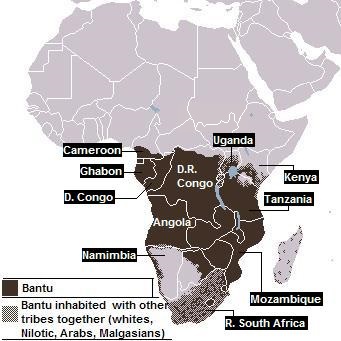
More than 400 national tribes in Africa speak Badu languages and have many common customs and traditions. Their civilization, mainly based on their same language, detected geographically in the following areas of Africa from south Cameroun up to southeast Kenya ad from the Northwest portion of the folk democracy of Congo until South Africa.
SWAHILI
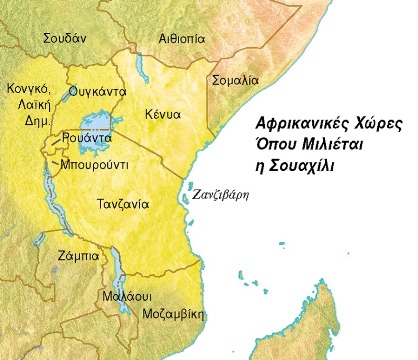
In the seaside part of Africa the Badu were mixed with the Muslin Arabs and Persian traders, leading from the 7th and 8th century AD to the advancement of mixed Arabic, Persian and African Cities-countries, which Arabs named Swahili, (Which means in Arabic “to the coast”). The Swahili kingdoms had regular commercial relationships with the Islamic world and Asia and the language which was developed still remains the mother language of the residents of the seaside east Africa from the south Somalia up to the north Mozambique. Swahili, except from the native speakers, is also commonly used for the communication of individuals from different language communities because it is wide spread to big parts of East Asia.
SWAHILI SPEAKERS
ETHIOPIA
In the Roman era, Ethiopia was an independent nation known as the kingdom of Axum. In the 4th century a Greek monk named Froumentios brought Christianity which soon became the official religion and Froumentios became the first archbishop. The name Axum would be lost and the country would be named after the name given by the ancient Greeks, Ethiopia which means sun burnt man. The following centuries after Christianity, Ethiopians developed in the area a number of indepented states, preserving close relationship with Byzantium. Great artistic achievements of Ethiopian Christianity have been brought to light.
ETHIOPIAN CHURCH

In Justinian'w era and possibly at his instigation, the King of Ethiopia raided Yemen, defeated his ruler and established Ethiopian sovereignty that lasted about half a century. The country was then at its peak, and after the 7th century began to decline, probably because of the spread of Islam, which prevented trade with the Far East and the major markets of Alexandria and southern Europe.
Back to the Story of Humankind