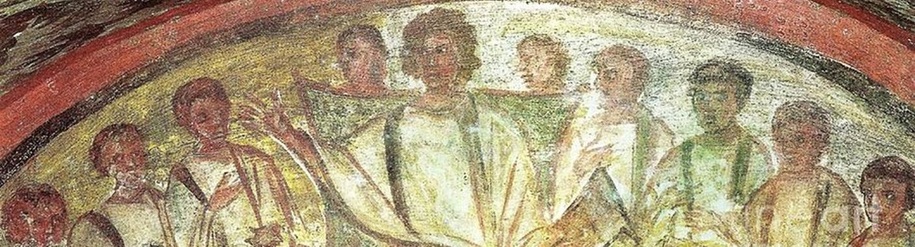
Around 50, Christianity began to be cut off from Judaism, gradually the Romans learned to distinguish Christians from the Jews. Jerusalem was the center of both Christianity and Judaism, but after its destruction by the Romans in 70, the center of Christianity was moved to the capital of the Empire Rome, where Peter and Paul were killed. The Church, the head of which will be the bishop of Rome since then, distanced itself from the synagogue and turned much more into preaching and proselytizing to the only one God, who created the world from nothing and consists of God-Father, Jesus Son and the Holy Spirit.

In the course of time, the Christianized pagans became much more than the Christianized Jews. The Christians refused to worship official Roman gods, many Romans regarded it as treason against the state, and felt rage and dislike for this new religion while showing tolerance for all the rest. Emperor Nero used the Christian community as a scapegoat for the fire of Rome in 64 and sent many Christians to death, but in the early years of Christianity persecutions were more disorganized manifestations of violence by indignant mobs. Formal persecution on a massive scale occurred in around 250 from Decius and in 303 to 311 from Diocletian. The Christians strength grew as they became martyrs, because the world needed a faith that would give hope. Back to the Story of Humankind