
An important element of Constantine's policy was his decision to strengthen Christianity. By a joint decision of himself and Licinious, with the Edict of Milan, freedom of religion was established. Constantine, with a series of energies, promoted and favored Christianity, protected him from heresies, contributed with his mother to the building of churches; shortly before he died, he was baptized Christian. The religious choices of Constantine and his "conversion" towards Christianity are a matter of endless scientific conflicts, others claim that Constantine was religiously indifferent and supported Christianity for purely political reasons and others believe in his sincere conversion to the new religion.
The second major change brought about was the transfer of the decision center to the East, to the ancient colony that the Megarians had founded in the 7th century BC and was called Byzantium. The inauguration of New Rome as originally named, which after a while took the name of Constantinople, took place on 11 May 330. Since then, the history of the Roman empire of the East, known as the Byzantine Empire, had begun.
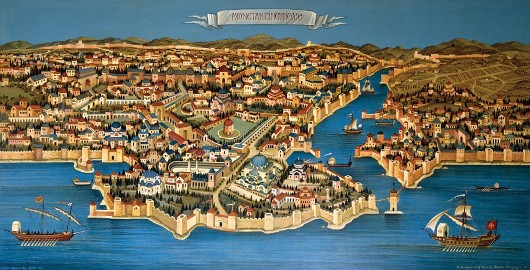
The new capital, apart from its privileged position, which provided better defense and economic development, was located near the eastern regions, which were mostly inhabited by Greeks and Christians. The Hellenistic years was still evident and contributed to the prevalence of the Greek element in the eastern part of the Empire. Thus, the gravity of the empire was moved from Latin cultural to Greek. Back to the Story of Humankind