The main economic unit at this time was the house. It consisted of a small group of people producing and consuming; the owner, his wife, his children and possibly slaves. The owner was trying to make his house self-sufficient, by combining agriculture and livestock farming because of the trade lack; they manufactured on their own all utensils and clothing they needed. Population redevelopments and the association of many neighboring houses lead to the creation of small groups with tribal bonds, which formed the core of city-states in mainland Greece, the Aegean islands and western Asia Minor. The new communities were coherent and sought order and stability. The national feeling and the consciousness of the citizen who is tied to his land was developed.

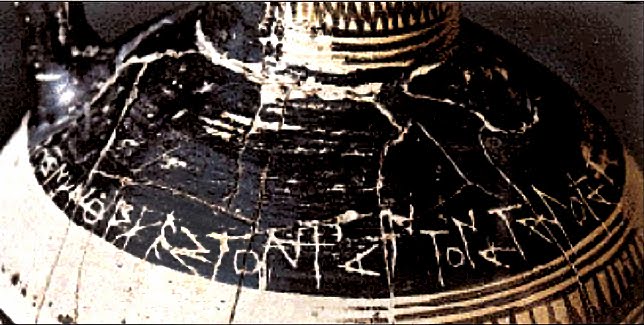
The first signs of recovery began to emerge from 850 BC, when the gradual restoration of trade relations with the East began. This time is called geometric, because geometric themes in angiography and it is characterized by the gradual increase of population and wealth as well as the transformation of Greek states and kingdoms into a first form of Cities called “polis”. Originally “polis” was identified with the city, the urban community, but later “Polis” was called the city along with the surrounding villages or a confederation of cities. They were not mentioned by place names but by the tribal name of the citizens, for example: polis of Athenians, not polis=city of Athens. Polis acquired an elected parliament that replaced Kings and the councils of elders and had the right to legislate. The economic boom and demographic eruption created the need for trade and the establishment of colonies (2nd Greek colonization). Greeks received from Phoenicians the alphabet with only consonant, they added vowels and created the first complete alphabetical scripture. Writing is rapidly spreaded, contributing to the upcoming culmination of Greek culture.
Two of the most important works of world literature, the Iliad and the Odyssey, are being created at this time. People are taught reading and writing from those works which form the foundation for the archaic world’s culture and source of inspiration for the artists of all fine arts. Back to the Story of Humankind