PREVIOUS
NEXT
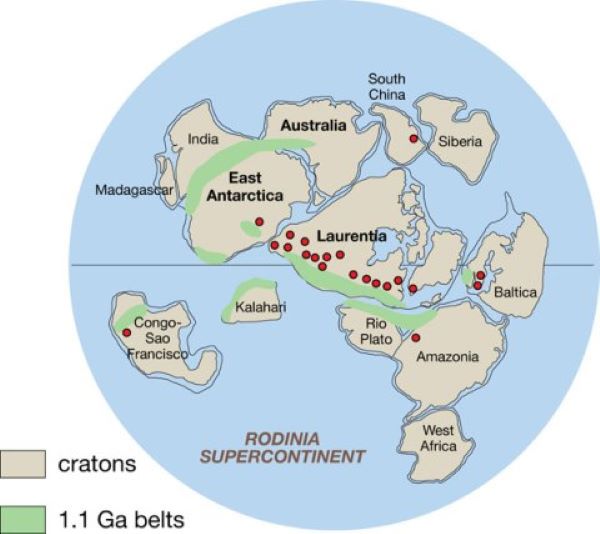
1 BILLION YEARS AGO
Earth was covered by vast oceans, while large landmasses drifted, collided, and separated due to tectonic plate movements. About 1 billion years ago, most of these landmasses joined together to form a supercontinent known as Rodinia. This supercontinent was barren and lifeless, while in the oceans new forms of life continued to evolve.
700 MILLION YEARS AGO
A major global cooling event occurred, possibly because the arrangement of the continents disrupted warm ocean currents that normally transported heat from the equator toward the poles. Ice first formed around the polar regions, but eventually enormous glaciers spread across much of the planet. Average global temperatures dropped dramatically, and large parts of the oceans became covered by thick ice. Reduced sunlight and harsh environmental conditions caused the extinction of many marine organisms.
630 MILLION YEARS AGO
Although the surface remained frozen, geothermal heat and volcanic activity continued beneath Earth’s crust. Eventually, massive volcanic eruptions released huge amounts of carbon dioxide into the atmosphere. The resulting greenhouse effect gradually warmed the planet, melting the ice and breaking Rodinia into smaller continents. As temperatures rose, ocean circulation resumed and life slowly recovered.
500 MILLION YEARS AGO
As the ice retreated and climates became warmer, Earth’s oceans filled with increasingly complex organisms. Primitive animals evolved shells, spines, eyes, mouths, and fins. Coral reefs began to form, while the first fish-like vertebrates appeared in the seas.
400 MILLION YEARS AGO
Oxygen produced by photosynthetic organisms gradually transformed Earth’s atmosphere. As oxygen levels increased, an ozone layer formed in the upper atmosphere, protecting the planet from harmful ultraviolet radiation. This protection allowed life to expand more safely onto land.
During this period, plants spread across the continents, forming the first forests and altering the environment dramatically. Arthropods and early amphibian-like vertebrates also began colonizing terrestrial habitats.
300 MILLION YEARS AGO
Large regions of Earth were covered with dense swamp forests resembling tropical wetlands. Over time, dead plant material accumulated and formed enormous coal deposits. At the same time, microscopic marine organisms buried beneath sediments gradually contributed to the formation of oil and natural gas. Hundreds of millions of years later, these fossil fuels would power the Industrial Revolution and modern civilization.
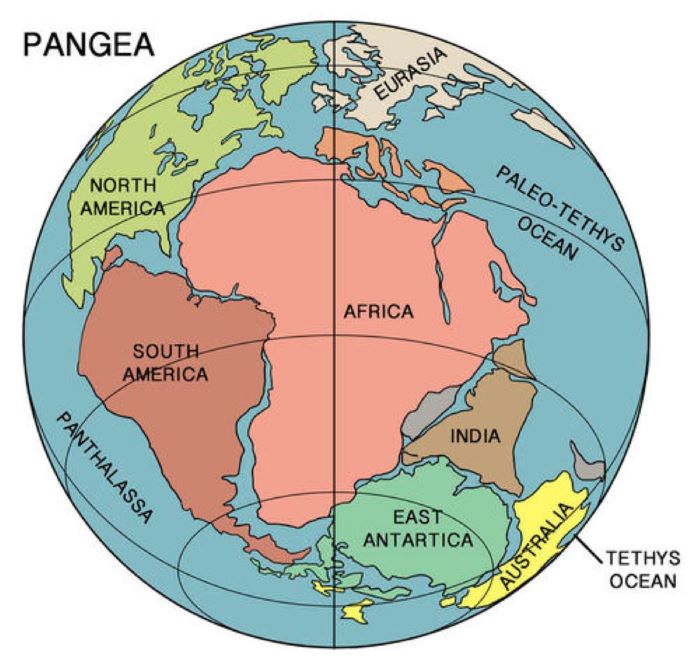
250 MILLION YEARS AGO
Enormous volcanic eruptions in what is now Siberia released vast quantities of lava, ash, and toxic gases into the atmosphere. At the same time, tectonic movements joined most landmasses together into a new supercontinent: Pangaea. Atmospheric chemistry changed dramatically, leading to severe climate instability and the greatest mass extinction in Earth’s history. Nearly 90–95% of species disappeared, but this catastrophe also opened evolutionary opportunities for new groups of animals, including the ancestors of the dinosaurs.
180 MILLION YEARS AGO
Renewed volcanic activity gradually fractured Pangaea, and its continental fragments slowly drifted toward their present positions. Dinosaurs spread across nearly all continents, thriving in the warm climates of the Mesozoic Era.
65 MILLION YEARS AGO
A massive asteroid approximately 10 kilometers in diameter struck the region of present-day Mexico. The impact ejected enormous quantities of dust and debris into the atmosphere. Combined with intense volcanic activity in the Indian subcontinent, the event darkened the skies and severely disrupted Earth’s climate. Most dinosaurs, along with many other species, became extinct.
50 MILLION YEARS AGO
After the extinction of the dinosaurs, mammals and birds diversified rapidly. Continents continued shifting because of tectonic plate movements, while erosion and climate gradually shaped many of the landscapes recognizable today.
2 MILLION YEARS AGO
Vast ice sheets began spreading from the polar regions, periodically covering large parts of Earth. Since then, the planet has experienced alternating cold glacial periods and warmer interglacial periods. Today, humanity lives in an interglacial period that began roughly 11,700 years ago, after the end of the last Ice Age.
Back to the Story of Humankind