The oligarchs continued to rule for five centuries after Cordos, under their rule the world was divided into three ranks: the horsemen, who had their own horses and were the cavalry in the war, the pairing which had at least one pair of oxen and they fought as soldiers and finally the serfs. Citizens were the first two classes, while only the horsemen could become lords or judges. Around 800 BC became the total union of Attica in a single state of the city of Athenians and at the same time began the Panathenaea, the top celebration in honor of the goddess Athena. There was great disruption in Athenian society as the rich became richer with the growth of trade and land lease by landowners on unbearable terms so poor farmers could not cope with debt and many ended up slaves. The poor were ready to rise and the rich were ready to react dynamically when a wise man, Solon, with his laws, managed to stop the civil bloodshed.
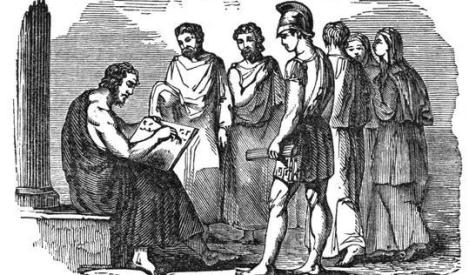
The laws introduced by Solon were published in -592, written on wooden plates and posted in the Rectory. According to them, society was divided into four classes based on property. In the first three, taxation was imposed on their income, while the poor were exempt from taxation. Solon created a parliament of 400 people and the popular court of Ilia consisting of 6000 men. He reorganized the army and regulated economic issues, such as forbidding the export of oil if there was no surplus. One of his most important laws was 'seisachtia', which liberated those who had become slaves due to debts, and it was forbidden to lend the pledge to the freedom of the individual. He established the institution of the covenant so that one could leave his fortune to anyone he wanted, he made arrangements for the private relations of the citizens (eg watering rules, minimum building distances), introduced social welfare rules for the disabled, anti-adultery, rape, prostitution laws to support the family, he set as an obligation that parents had to teach their children some art and for those who did not respond, their children were relieved of the care of elderly parents. It also made it obligatory for citizens to involve in public life. Most Athenians were not happy with these laws. The poor wanted a land reparcelling and the rich wanted assurance of their privileges, but the laws turned out to be a golden turn, they managed to create social peace, limit injustice and lay the foundations for the first democracy that the world would meet. Back to the Story of Humankind