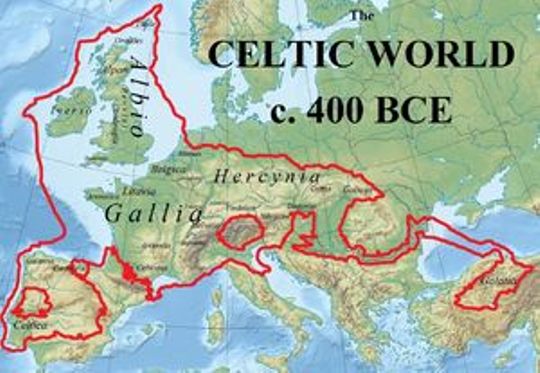
The Celtic society on its basis consisted of a number of families. Each tribe was run by a king who was chosen by the warriors. They were divided into three main classes: a military aristocracy, a class of intellectuals, including the Druids (named after the oak tree that was sacred) and the artists and a third in which all of the rest were included. The intellectuals/artists were inferior to the warriors and the Druids, all of them ruled by the king. The artists were involved with poetry and music, as well as with metal processing. The third social class consisted of farmers, who paid taxes to the king and to warriors in exchange for their protection. At the bottom of the social hierarchy, without any right, there were slaves, mainly prisoners of war. The Celts created a whole set of excellent perfection tools, devised new types of plows and other agricultural tools as well with new cultivation methods, but had not discovered writing and all the information about them came from archaeological finds and from the ancient Greek and Roman authors.
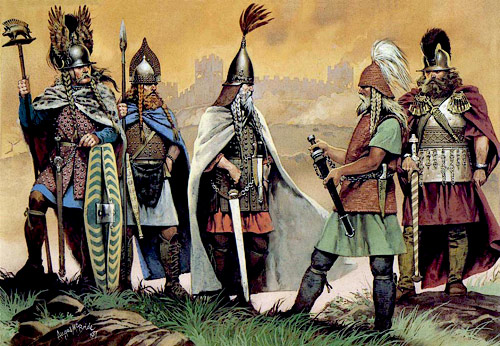
Despite its warlike and nomadic character, the Celtic society was not male-dominated. Women could choose their husband and even after marriage they managed their property and had their own herd. As wealth was translated into social status, several wealthy women became queens.
In 390 BC the Gauls crossed the Alps, invaded Italy, and conquered Rome. From 300 BC they began to settle on the British Isles. In 280 BC Gaul crossed and looted Macedonia and Thrace, some of them attempted to pillage the Delphi Oracle. Other groups settled in the area of today's Ankara, also called Galatia. On the shores of the Mediterranean they gained the reputation of undefeated warriors, so the Greeks of Sicily, the Carthage, the Etruscans, and the Ptolemaic of Egypt used them as mercenaries for at least 2 centuries.
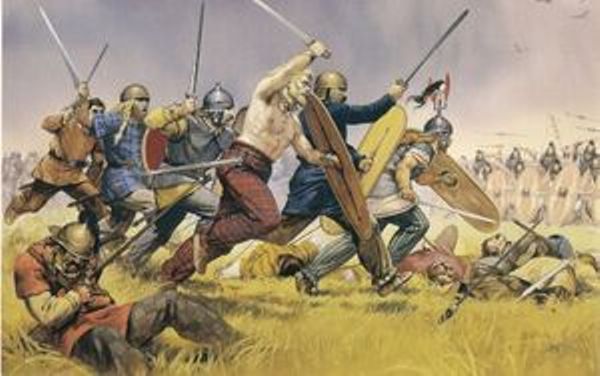
As the Celts were many different groups and tribes with their own kings, they never managed to be united under a central authority and become an empire. In 125 BC the Romans conquered southern Gaul and in 52 BC Julius Caesar conquered the whole of the country. After the fall of Rome, the Celts mingled with the German tribes and gradually assimilated, so that the only regions in Europe that retained the old characteristics of the race are Scotland and Ireland. Especially in Ireland, despite the influence of English, Saxons and Vikings, the Celts managed to maintain a strong cultural identity. Back to the Story of Humankind