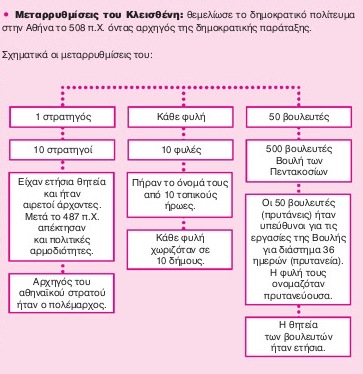
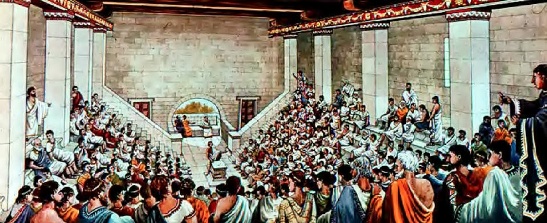
Athenians were spited into four teams, according to their economic situation. Klisthenis did not abolish Arios Pagos, the highest court of Athens, or the aristocratic council, but he significally restricted their responsibilities and he made sure that all Athenians had the right to speak in the Ekklisia tou dimou, the public gathering were all male Athenians of the mature age could talk about the issues concerning the city. But when the council decided that someone was waffling, he was fined. The decisions were made with voting. With the changes of Klisthenis, more and more people were given the right to contribute to the public and the economic and social disagreements were diminished. Athenians formed two kinds o “parties”, the Democratic Party and the aristocratic party. The aristocratic party was consisted of the wealthier citizens while the democratic party was comprised from the people of commerce.
5th century Athenians were exceptionally hospital and in a gathering each guest could bring a completely random other guest, who was honored, fed and was welcome to spend the night there. In the city there were places were foreign, poor and old people were taken care of. Also the government gave pensions to the war veterans and donated money to orphans. The Athenian citizen used to spend his day going to Agora, to the parliament or to the ekklisia tou dimou. In Athens big celebrations and sports events were organized as well as theaters and gatherings between friends. The marriage between two people was decided by their parents. With the father of the wife having to give a prika, gifts for the husband, a man could have many wifes. Women had to stay all day at home and do domestic chores. If the husband died, all the heritance went to the male offspring. Prostitution advanced to a vocation with many stages. Prostitutes entertained the guests at a gathering with dance and music and eventually they slept with them.

, Eteres (courtesans) were the women who decided not to get married and live freely without the male burden. They were educated in order to talk with men, some of them became famous for their beauty and their spirit. The master of the house was the father who had the right of life or death over his children. He could let his baby infant die, if he had doubts about being the father, if the child was sick or just because he did not want a child. Babies of slaves were seldom allowed to live, although all of them had a chance. The moribund babies were put into earthenware pots in a temple and anyone could adopt them. If nobody adopted them in a certain time, they were killed.
Athens had not public schools. Platon advocated for public education but it was believed that the competition between private schools brought better results. Although, there were public gyms for children who went to school until their 14 or 16 while the wealthier ones continued their education even more. The everyday program included writing and reading, music and exercise for the body. The girls at home learned housekeeping and the domestic responsibilities. The boys under 16 were given particular emphasis to exercise, because they were getting ready for war. At 19 they had to oath not to shame the sacred weapons and not abandon their allies in the battlefield. Back to the Story of Humankind