The Minoans became good seafarers - they certainly have advanced knowledge of astrology and shipbuilding - and they developed a strong navy with which they dominate the Aegean. They cleansed the seas from the pirates and made colonies on the Aegean islands and at the Mediterranean coast. They travel to the East, Egypt, and Cyprus selling cereals, honey, oil, wine and other agricultural products, which they store in large ornate vases. They bring back copper, silver, gold, ivory, precious stones, which they trade and enrich; their strength is constantly increasing. They are developing a civilization that humanity has never seen before. The Minoans are dressed in colorful clothes and have a thin waist, they wear all jewels and women are equal to men, they have nothing to do with oriental constraints and harems. Women take part in all the events of social life, even in sports and hunting, are wearing plush skirts and shawls, stained and groomed. And the men are well dressed, shaved with cared hair, wearing tight clothes to emphasize their waist.

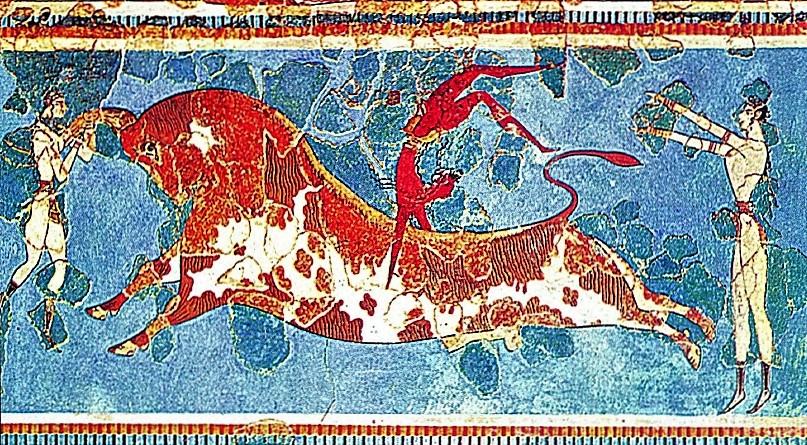
Painting, sculpture and architecture from the Minoans are still inspiring today, while the art of stamps, which were made of precious metals and wore them on the finger, was used as a signature in their trade. Dance and singing and celebrations were frequent, there were theaters for 500 or more people, there were bullring and gladiators, competitions, group hunting in the mountains, games similar to chess.
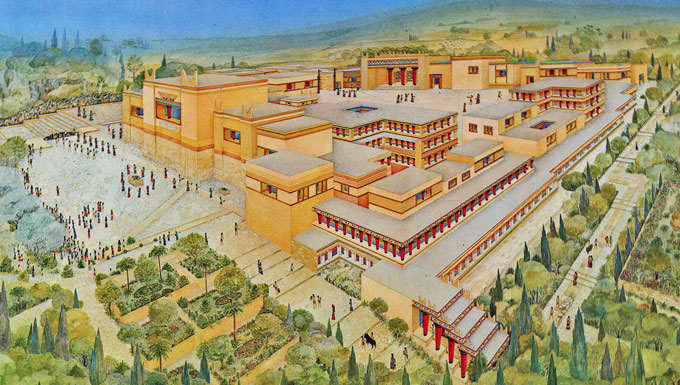
In 1700 BC the kingdom was destroyed by an earthquake, but the Minoans were not defeated; rebuilt their cities and Minos rebuilt an even brighter and bigger palace than the previous one, a masterpiece of architecture in which he lives with his family and five hundred others: priests, bureaucrats, artists, craftsmen, warehousekeepers, servants, slaves. It is a 1500-room building with 4 and 5 storey, built around a very large courtyard. There is an aqueduct that offers running water, sewerage for the first time in history, dance and event spaces, altars, a magnificent throne room, dozens of separate apartments. The halls are decorated with stunning frescoes, sculptures, gold and silver artwork, while in the basements there are workshops where craftsmen work every day to built jewelery, fabrics, clothes, vases, tools.
In 1500 BC life is beautiful. Apart from the slaves who survive only to serve and work without rights, the inhabitants of the island have abundant food, security, joy, prospects. Even in distant villages, even landless people could become hunters, fishermen, craftsmen, artists and supply the rich to have a share in prosperity. It will last for a few centuries only. An eruption of the volcano on the nearby island of Santorini and repeated waves of many meters that hit every half hour will stifle civilization within a few hours. Weakened, the remaining Minoans, with their navy destroyed, will not be able to withstand the Mycenaean raid that will overcome nd enslave them.
When the Incas was discovered by the Europeans, the latter were accepted like gods as they had in their tradition the visit of some white gods with very advanced technology in old ages. Many researchers claim that, according to Inca’s descriptions and draws, those White people were Minoans, who had made the trip thousands of years before Columbus. Back to the Story of Humankind