About 252 million years ago, enormous volcanic eruptions in what is now Siberia released massive amounts of carbon dioxide and other gases into the atmosphere. Earth’s climate became hotter and more unstable, and many organisms were unable to survive. This mass extinction opened the way for the evolution of new groups of animals, including the first dinosaurs.
The earliest dinosaurs appeared about 230 million years ago. At first they were relatively small, often less than one meter in length, but they rapidly evolved into a great variety of forms.
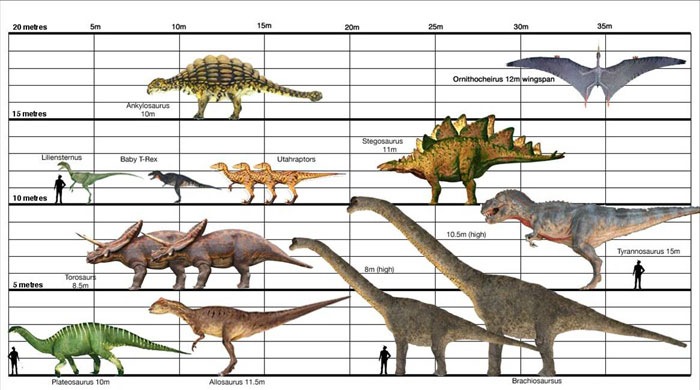
The warm climate and the spread of vast forests created rich ecosystems. Herbivorous dinosaurs increased in both size and number, which in turn encouraged the evolution of large carnivorous species. Over millions of years, some dinosaurs became the largest land animals ever to walk the Earth.
Dinosaurs diversified greatly and occupied almost every terrestrial habitat. Many species were quadrupedal, while others moved rapidly on two hind limbs. They laid eggs, and their bodies were covered with scales, although today we know that many dinosaurs also possessed primitive feathers.
For nearly 170 million years, dinosaurs dominated Earth’s terrestrial ecosystems. During the same period, pterosaurs flew through the skies, while large marine reptiles such as ichthyosaurs and plesiosaurs lived in the oceans.
About 66 million years ago, a gigantic asteroid approximately 10 kilometers in diameter collided with Earth in the region of what is now the Yucatán Peninsula in Mexico. The impact released enormous amounts of energy, causing global wildfires, earthquakes, and giant sea waves, while huge quantities of dust and gases were thrown into the atmosphere.
The thick layer of dust greatly reduced sunlight for a long period of time, causing a dramatic drop in temperature and severe disruption of photosynthesis. Plants began to disappear, and with them the food chains collapsed. Herbivorous dinosaurs were affected first, followed by the carnivorous species.
 The mass extinction at the end of the Cretaceous Period led to the disappearance of most dinosaurs. However, some small feathered dinosaurs survived and eventually evolved into modern birds.
After the extinction of the dinosaurs, mammals — which until then had remained mostly small and lived in the shadow of the giant reptiles — began to spread and evolve rapidly, opening a new chapter in the history of life.
Back to the Story of Humankind
The mass extinction at the end of the Cretaceous Period led to the disappearance of most dinosaurs. However, some small feathered dinosaurs survived and eventually evolved into modern birds.
After the extinction of the dinosaurs, mammals — which until then had remained mostly small and lived in the shadow of the giant reptiles — began to spread and evolve rapidly, opening a new chapter in the history of life.
Back to the Story of Humankind